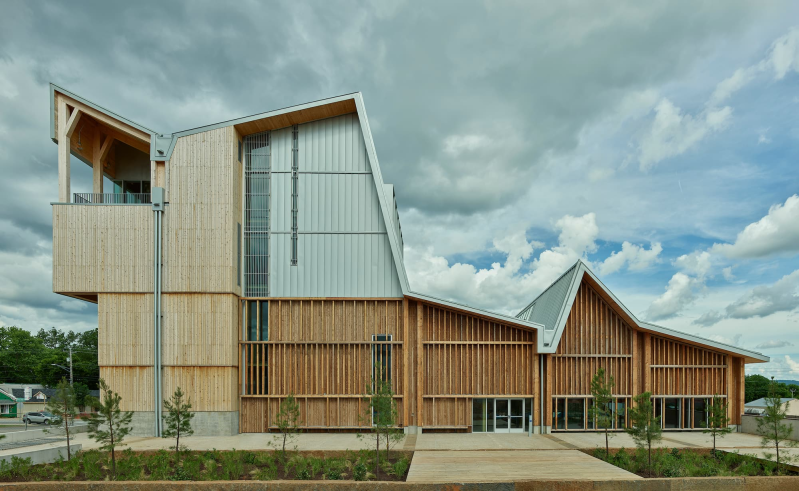
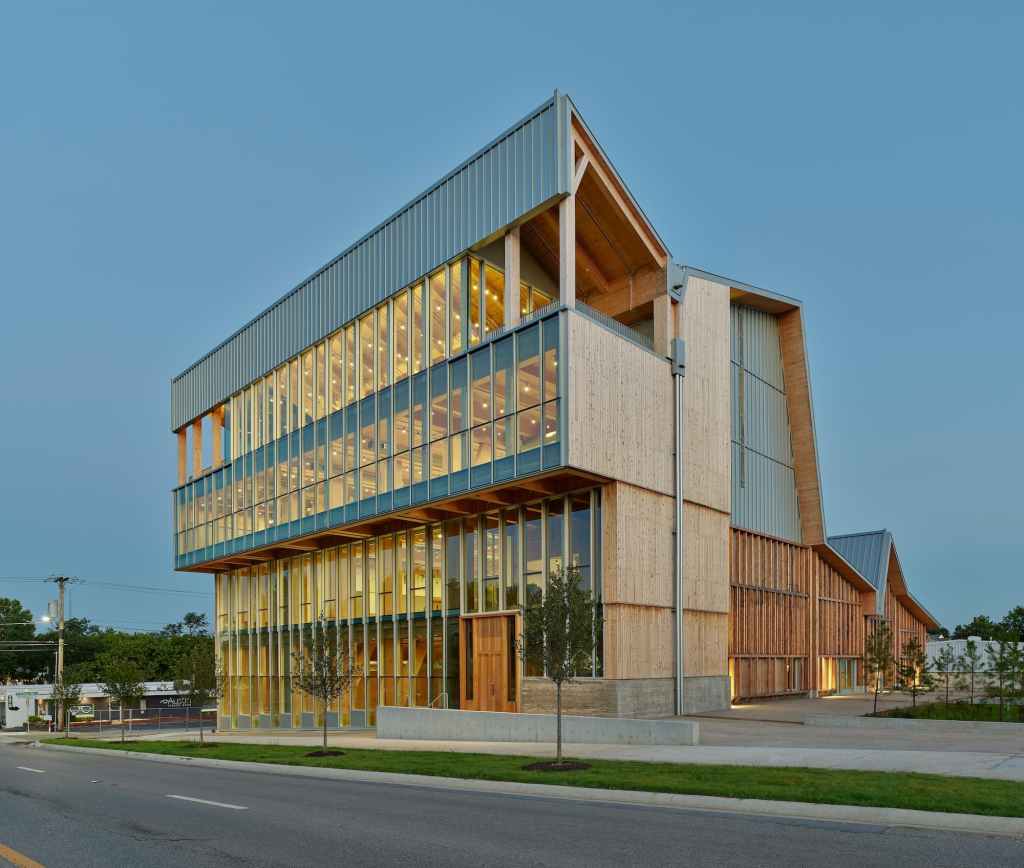
With the opening of the Anthony Timberlands Center for Design and Materials Innovation in Fayetteville, Arkansas, the University of Arkansas has launched a building that represents far more than just the expansion of its campus footprint. Designed by the Dublin-based Grafton Architects in collaboration with local partner Modus Studio, this 42,000-square-foot mass timber complex embodies a synthesis of architectural ambition, environmental stewardship, material innovation, and pedagogical vision rarely achieved in a single project.
For the university, it is a cornerstone of its emerging Art and Design District; for Arkansas, it is a tangible commitment to timber-centered economies and sustainable building technologies; and for the architectural profession at large, it signals a future in which design excellence, ecological responsibility, and hands-on education converge with remarkable clarity and purpose. “Every structural beam, every surface tells a story—of material, of place, of making, of the future of sustainable design,” said Yvonne Farrell, Grafton Architects.
For Yvonne Farrell and Shelley McNamara, the founders of Grafton Architects and recipients of the 2020 Pritzker Architecture Prize, the Anthony Timberlands Center marks their first completed project in the United States—a debut as ambitious as it is regionally grounded. Known internationally for works like the University Campus UTEC in Lima, Peru, and the Venice Biennale’s Freespace Pavilion, Grafton brings to Arkansas a design philosophy that values material authenticity, climatic responsiveness, and spatial generosity.
Here, working in partnership with Modus Studio and supported by a coalition of donors, civic leaders, and educators, the architects have created a building that celebrates timber in every dimension: as structural framework, environmental mediator, educational tool, and cultural artifact.
A Mission Beyond the Classroom
The Anthony Timberlands Center embodies a pedagogical ambition that extends far beyond conventional architectural education. Dean Peter MacKeith, who has long championed the idea that architecture schools must operate as engines of regional innovation, sees the building as a living curriculum where students learn by engaging directly with materials, technologies, and fabrication processes.
“The Center teaches students the entire lifecycle of design and construction in real time, supporting ongoing education in critical issues such as affordable housing and sustainability, wood product development, and building technology,” says Peter MacKeith, Dean, Fay Jones School. “The project embodies the design excellence for which the school, university and region are known, but also demonstrates commitment to the greater environmental and economic good of the state, especially to those citizens and enterprises in the forested regions.”
To that end, the center integrates a new timber design innovation degree program, expanded design-build studios, and state-of-the-art digital fabrication laboratories under one roof. Students here will not only design theoretical projects but also participate in the complete life cycle of architecture, from raw material to finished construction.
Faculty research will focus on affordable housing prototypes, sustainable forestry practices, and next-generation timber technologies, positioning the university as a leader in both regional economic development and global sustainability discourse. The building itself becomes part of this research ecosystem, a full-scale laboratory where structure, climate performance, and spatial flexibility are continually studied, documented, and refined.
Designing with Timber: Structure, Climate, and Culture
From the beginning, Grafton Architects approached the project with the conviction that architecture should emerge from the conditions of its place—its climate, its materials, its cultural traditions. Working closely with Modus Studio, the team sourced Southern Yellow Pine, white oak, red cedar, black locust, and bois d’arc from across Arkansas, ensuring that the building’s structural frame, enclosure systems, and interior finishes expressed a direct connection to the state’s forestry economy.
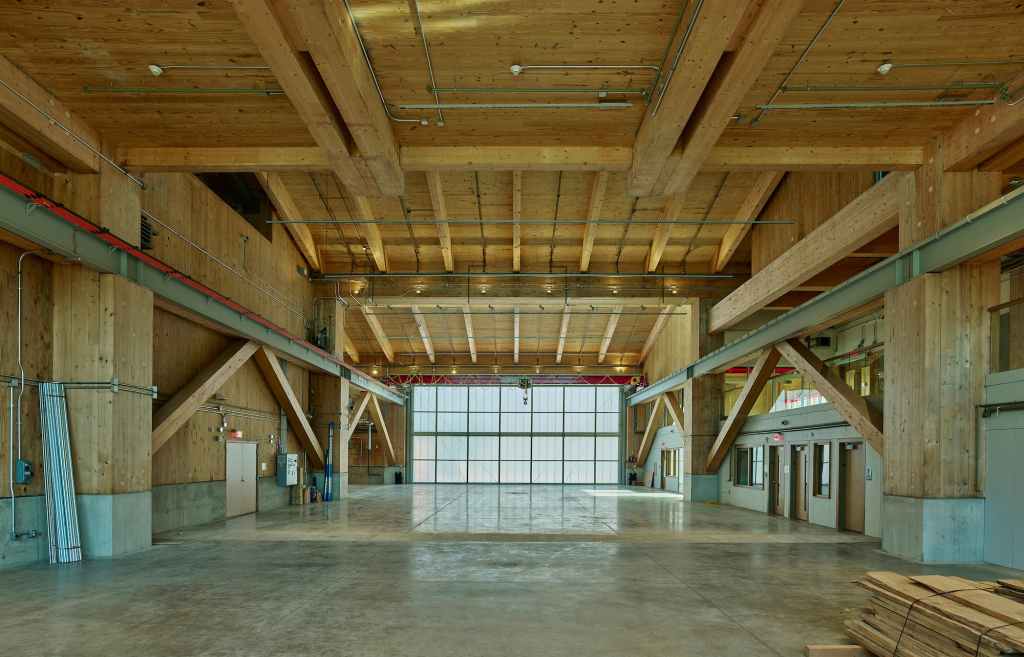
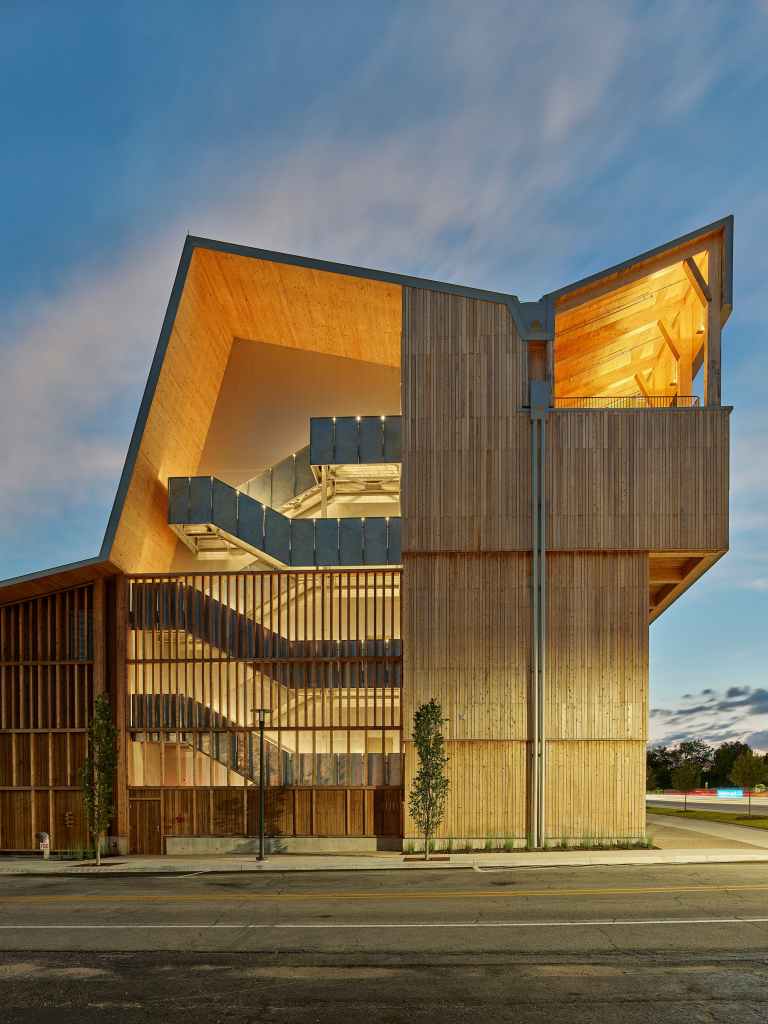
The building’s most striking feature is its cascading roof, composed of cross-laminated timber (CLT) panels spanning between monumental glue-laminated “gutter beams”. This roofscape performs multiple roles simultaneously: shading the interiors from intense summer sun, channeling rainwater into a central bioswale for landscape irrigation, and creating a dramatic civic presence for the Art and Design District. Beneath it, a double-height, 11,000-square-foot fabrication hall anchors the complex, surrounded by classrooms, seminar rooms, design studios, and galleries on the upper levels.
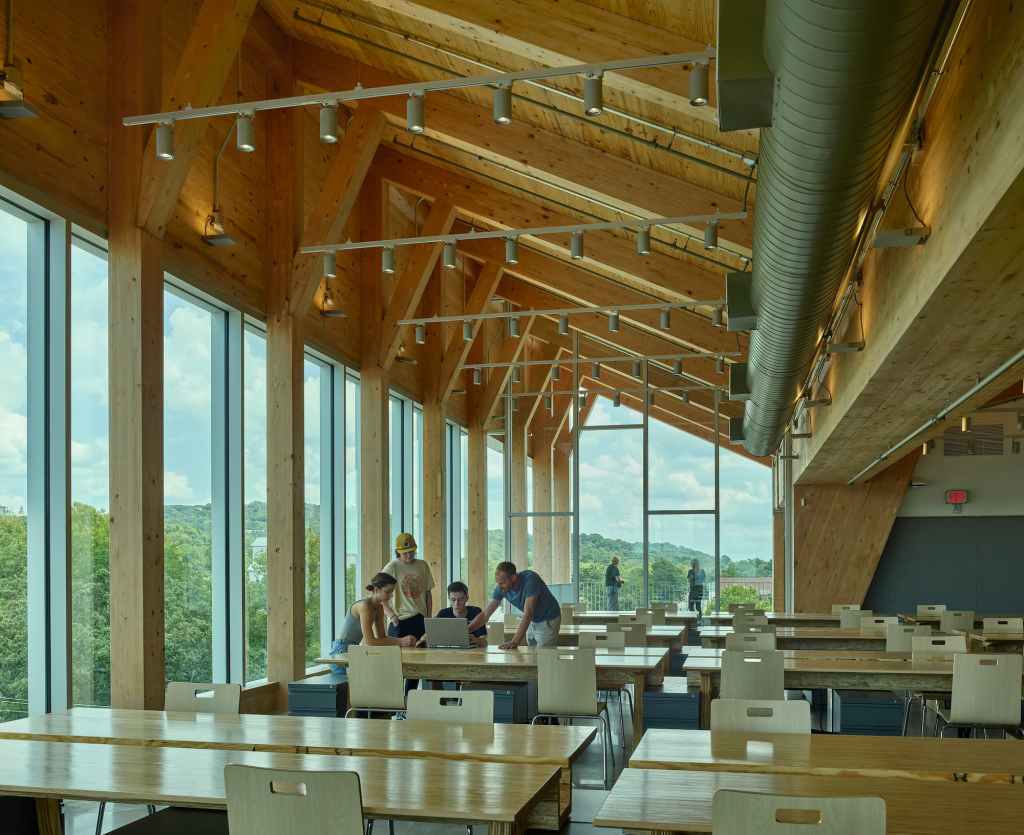
“Our design envisions the new building as a ‘Story Book of Timber’, where timber would be both the structural bones and the enclosing skin,” says Yvonne Farrell. “Responding to the local climate, we proposed a canopy of light and air, a cascading roof with glulam rainwater gutters, covering the open-air yard, the fabrication shop, and connecting all the teaching spaces, where upper galleries form educational and social vantage points.”
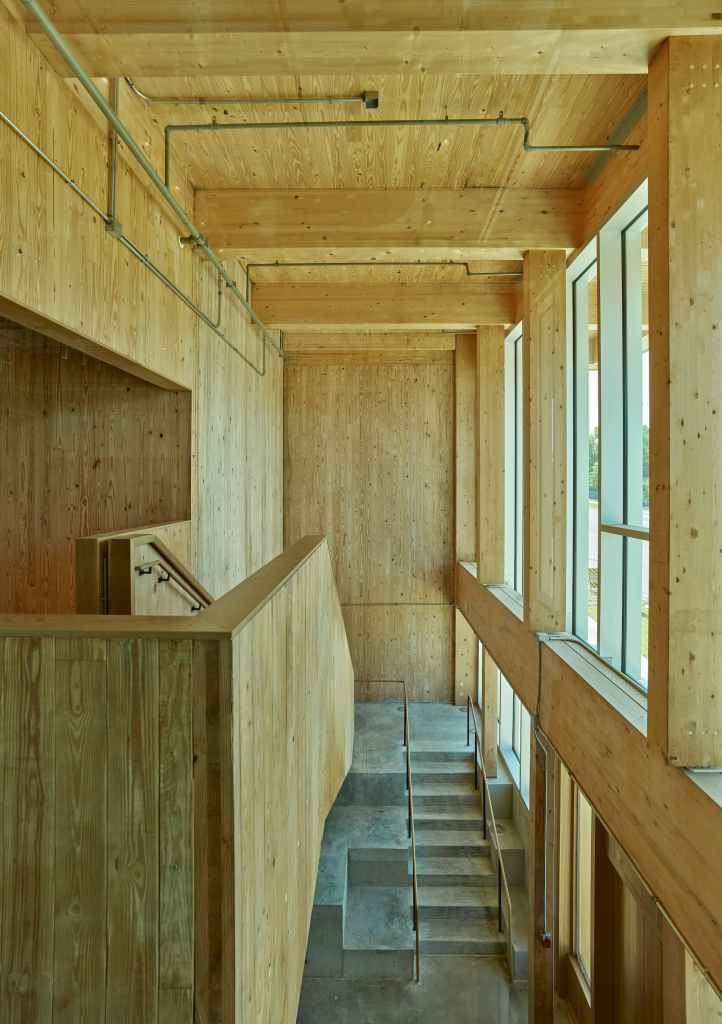
Circulation paths thread between these spaces, offering framed views into the fabrication shop and outward toward the courtyard beyond, reinforcing the building’s identity as a place of making, learning, and exchange. By orienting glazing to minimize solar gain and shaping the roof to capture prevailing breezes, the architects achieved passive environmental performance that reduces mechanical loads while enhancing interior comfort—a demonstration of climate-conscious design through architectural form rather than technological add-ons.
Global Design, Regional Expertise
While Grafton Architects brought international prestige and a conceptual framework rooted in their global portfolio, the collaboration with Modus Studio proved essential in translating this vision into a regionally attuned, technically sophisticated building. Based in Fayetteville, Modus Studio has spent over a decade developing expertise in mass timber construction, sustainable design practices, and community-engaged architecture.
“Mass timber is an increasingly utilized design and construction approach, but this project’s ambitions were to be innovative and inspiring on many levels,” said Chris Baribeau, AIA, principal at Modus Studio. “We worked hand in hand with Grafton to bridge international design with regional application to ensure the design intent was achieved.”
Together, the two firms balanced design ambition with constructability, ensuring that Arkansas’s forests and mills supplied much of the project’s material while local fabricators and builders executed its complex structural systems. The result is a building that merges global architectural discourse with regional identity and resource stewardship, proving that innovation need not come at the expense of cultural or ecological grounding.
Urban Connections: The Art and Design District
The Anthony Timberlands Center also strengthens the urban fabric of the University of Arkansas campus through its role in the emerging Art and Design District. Linked to the Windgate Studio and Design Center and the forthcoming Windgate Gallery and Foundations Building, the center frames Anthony’s Way, a shaded pedestrian courtyard planted with loblolly pines—the same species harvested in the region’s timber industry.
This courtyard doubles as social space, ecological infrastructure, and outdoor classroom, using rainwater harvested from the building’s cascading roof to irrigate the landscape while offering students and faculty places to gather, critique, and collaborate.
By juxtaposing living trees with timber construction, the project invites reflection on architecture’s relationship to natural systems: the slow growth of forests, the cycles of harvesting and regeneration, the transformation of raw material into cultural and educational infrastructure. Here, the landscape itself becomes part of the curriculum, teaching lessons in ecology, hydrology, and urban design alongside those of structure and form.
“What does it mean to be a school of architecture in a state that is 60% forest?” asks MacKeith. “Arkansas has a huge timber industry, but it has historically focused on paper, pulp and dimensional lumber. We’re trying to move the conversation forward, and bring our students closer to the reality of construction and spur the industry on to innovate at the same time.”
Philanthropy and Public Investment
The realization of the Anthony Timberlands Center depended on a lead naming gift from John Ed and Isabel Anthony, whose family company, Anthony Timberlands Incorporated, represents seven generations of forestry in Arkansas. Their investment, combined with funding from federal grants, state programs, university resources, private foundations, and individual donors, created a coalition of support bridging academia, industry, and government.
For the Anthony family, the project affirms the economic and cultural significance of Arkansas’s timber economy, while for the university it provides a platform for applied research, workforce training, and community engagement. The building thus serves not only as an academic facility but as a symbol of cross-sector collaboration, demonstrating how architecture can catalyze regional development and environmental stewardship simultaneously.
A National Model for Timber Education
As mass timber construction accelerates across North America—from Michael Green Architecture’s T3 projects to new CLT manufacturing facilities in the Pacific Northwest—the Anthony Timberlands Center positions the University of Arkansas as a national leader in timber research, education, and design innovation.
For Grafton Architects, the building synthesizes decades of thinking about material honesty, tectonic clarity, and spatial generosity. For Modus Studio, it continues a trajectory of regionally grounded, environmentally responsive practice. And for the Fay Jones School, it establishes a 21st-century identity rooted in design-build pedagogy, sustainability leadership, and civic engagement.
Arkansas on the Architectural Map
Long associated with the mid-century modern legacy of Fay Jones, the University of Arkansas now asserts itself as a site of contemporary architectural experimentation. With the Anthony Timberlands Center, the university links its past to its future, demonstrating that design excellence, climate action, and economic development can be mutually reinforcing rather than mutually exclusive.
With Grafton Architects’ international pedigree, Modus Studio’s regional expertise, and the Anthony family’s philanthropic vision, the project transforms Arkansas’s forests into classrooms, laboratories, and architectural landmarks—a Story Book of Timber written in glulam, CLT, and southern yellow pine, destined to influence both architectural education and mass timber construction for decades to come.