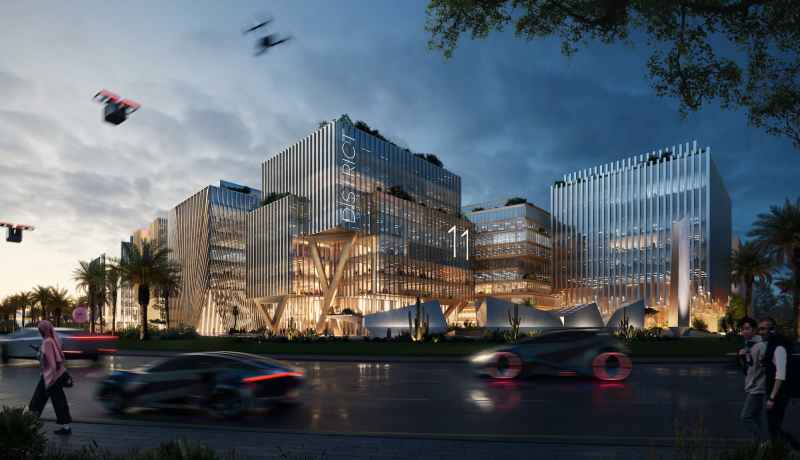
HWKN’s District 11 in Sharjah redefines authorship—where machines draft, humans curate, and a new design paradigm takes shape.
Artificial intelligence is rapidly becoming incorporated into the fundamental design processes of pioneering architecture and planning firms. New York-based HWKN recently generated a buzz with its design for Sharjah’s District 11, which the office describes as the “first AI-planned District” in the United Arab Emirates—and perhaps anywhere.
This announcement reveals a fundamental shift in AI’s relevance to day-to-day design activities. Early AI image generation using tools like Dall-E was perceived mainly as a curiosity. In contrast, HWKN’s comprehensive use of AI to research, design, and plan a new community indicates a remarkable turn.
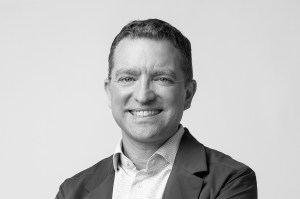
Curiosity about this significant leap (and a bit of healthy skepticism about a much-hyped topic) motivated me to interview Matthias Hollwich, founding principal of HWKN, about AI’s role in the District 11 project development process. What follows is an interchange about this fundamental technological shift, including how HWKN has addressed some known challenges and taken advantage of unexpected opportunities of this transformative technology.
BB: What inspired HWKN to integrate AI so deeply into the design process for District 11? Was there a defining moment that catalyzed this shift?
MH: Our shift began about two years ago when I challenged the firm to start experimenting with AI, not as a novelty or necessity, but as a real collaborator in our creative process. District 11 became the perfect opportunity to push that exploration further and apply all of our experiments to a project in the making. The scale of the project, the urgency to create a forward-thinking office community in Sharjah, and the complexity of its cultural and environmental context demanded a new approach. We used AI not just as a tool, but as a co-designer capable of supporting us with deep research, rapid prototyping, and site-specific needs.
District 11 is described as the first “ground-up office community positioned, designed, and programmed by AI.” What types of AI tools did you use for the project? How is your firm’s contribution more advanced than other firms currently using AI?
We used a combination of generative tools, such as Midjourney for conceptual inspiration, and ChatGPT, Perplexity, and Forma for data analysis and environmental performance modeling. On top of it we use 3D simulation AI software and add MNML to apply creative vision from Midjourney to the reality of the site. But it wasn’t just about the tools, it was about our method. We developed a three-phase process: exploration, articulation, and visualization. We reverse-engineered our designs from AI prompts, then translated them into buildable architecture. That translation layer, where human intuition refines machine output, is where the innovation lives. Many firms are playing around with AI; we’ve built a workflow around it.
AI is often criticized for its potential to generate homogeneous results. How did you ensure aesthetic and experiential diversity within the development?
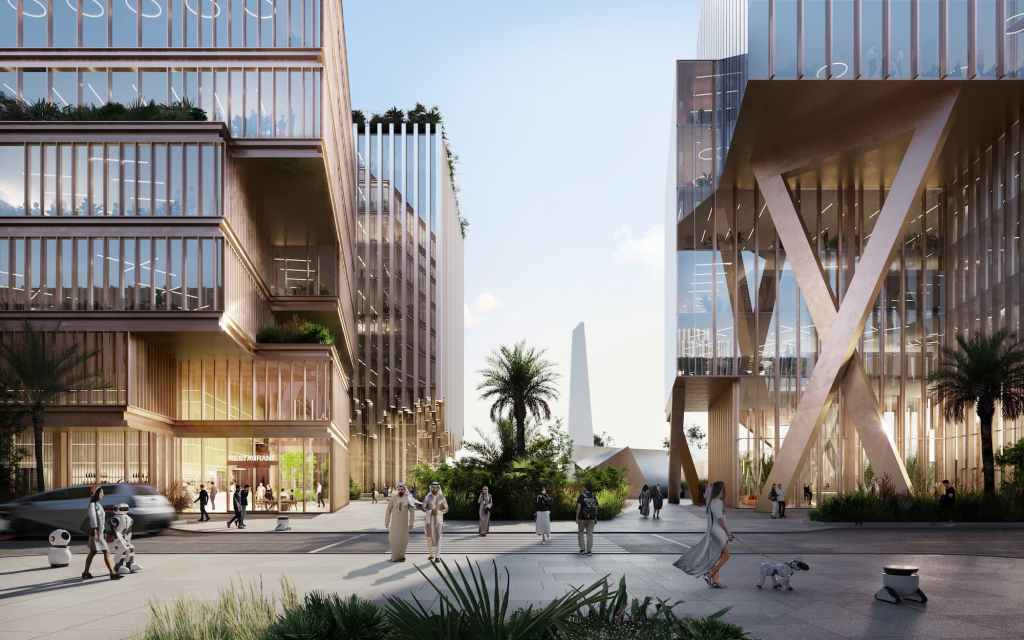
That is a concern for some, but then that person has not yet fully explored the level of exploration and innovation that AI offers to our profession. Each of District 11’s buildings has its own identity, generated by cross inspiration and focused on impact on the human scale. By inputting hyper-contextual prompts rooted in Sharjah’s culture, history, and extreme climate, and by curating the results with architectural sensitivity, we ensured no two buildings look or feel the same. The result is a neighborhood with texture, variety, and walkability.
District 11 merges work, leisure, and culture in a walkable neighborhood. What were some unexpected insights or outcomes that emerged from using AI to support this mixed-use programming?
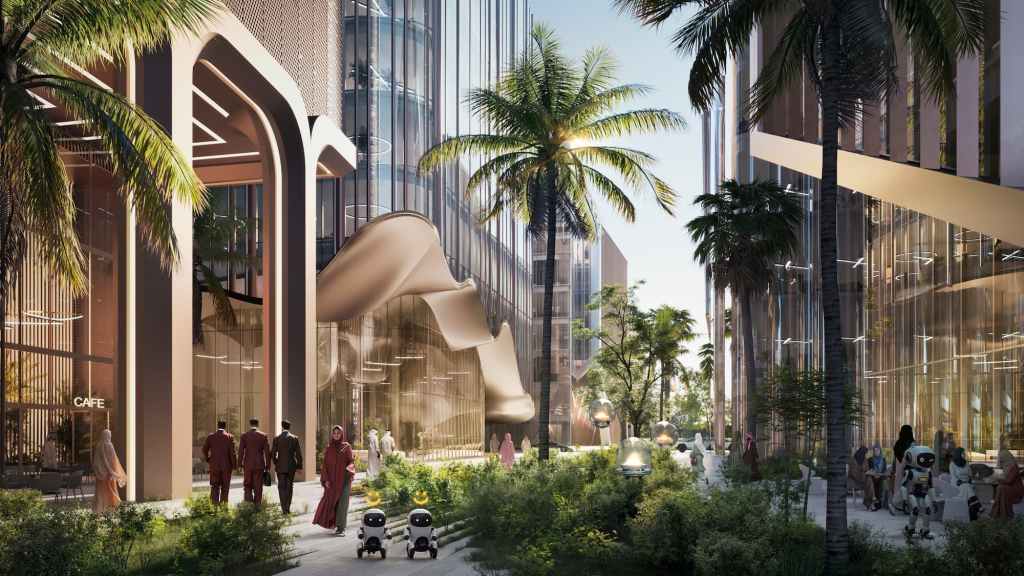
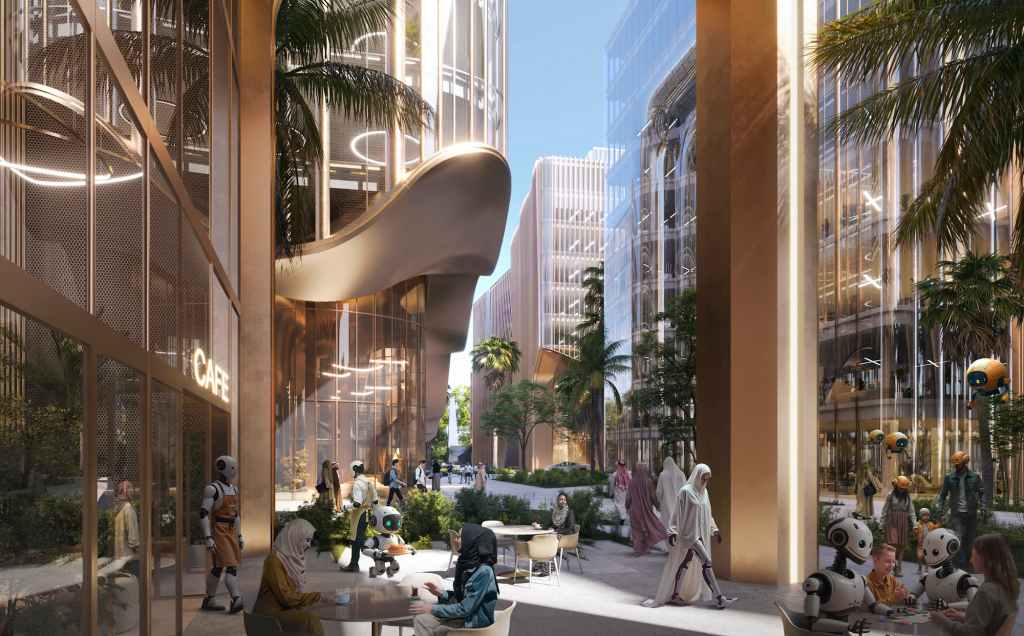
One surprising outcome was how AI helped us visualize circulation and shade in ways we wouldn’t have predicted. It gave us patterns for how people might move through the site over the course of a day and how the buildings could self-shade based on orientation and form. It also helped us prototype uses that respond to different times of day or work rhythms, like placing nurseries and healthcare centers near quieter office spaces and additional circulation patterns that draw people into the neighborhood, through buildings, and enrich an inside-outside experience for everybody.
Sharjah is known for its intense climate. How did AI help inform passive design strategies, such as shading, airflow, and material selection, in ways a traditional design approach might not have?
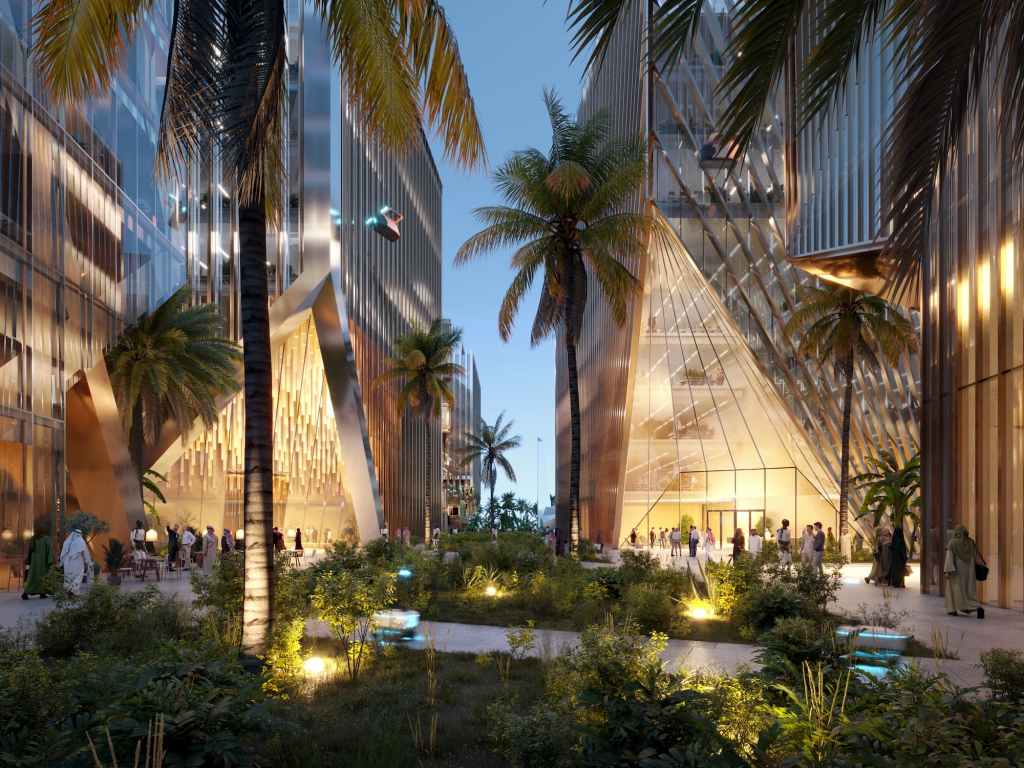
The extreme heat was central to our thinking. With AI, we were able to model sun and wind patterns in record time. This allowed us to generate building forms that maximize self-shading and encourage natural airflow throughout. We also used AI to suggest material strategies based on thermal performance and regional availability. What might take weeks to model traditionally, we were able to test and visualize in a matter of days, allowing for a more responsive design that’s deeply adapted to its environment.
Your “Work Resort” concept suggests a new typology. How does AI help reimagine the workplace—not just in form, but in function, adaptability, and well-being?
AI allows us to anticipate future needs, not just current ones. We used AI to prototype spaces that go beyond desks and meeting rooms. We designed for micro-moments: places to stretch, reflect, connect, and recharge. The Work Resort blends hospitality with workplace culture to improve quality of life, and AI helped us simulate and inspire how people would use those spaces throughout the day. It also informed design for adaptability, spaces that can shift as tenants grow or workstyles change.
Many fear that AI in architecture could diminish the architect’s role. From your experience, how has it amplified or evolved your own creative leadership? How will AI change the architect’s day-to-day activities?
AI hasn’t replaced our role, it’s expanded it. I no longer see myself only as the originator of form, but as a curator of possibilities. With AI generating a wide field of potential solutions, my leadership now lies in choosing what resonates most with the people and place we’re designing for. Day-to-day, architects will spend less time on manual modeling and more time on creative direction, human engagement, and storytelling. This makes the profession even more dynamic.
What role did collaboration—with developers, engineers, and AI specialists—play in shaping this project? Were there any key turning points where interdisciplinary dialogue reshaped the outcome?
Collaboration was absolutely critical. Al Marwan Real Estate’s openness to new ideas gave us the opportunity to try something that’s never been done before in this region. We worked closely to translate generative concepts into structurally and technically sound buildings. A key turning point was when early massing models revealed how different buildings could shade one another. That insight shifted the masterplan from isolated structures to a more interconnected design and a much richer experience.
Given the UAE’s rapid urban growth, what do you hope District 11 contributes to the architectural identity of Sharjah as a cultural and economic hub?
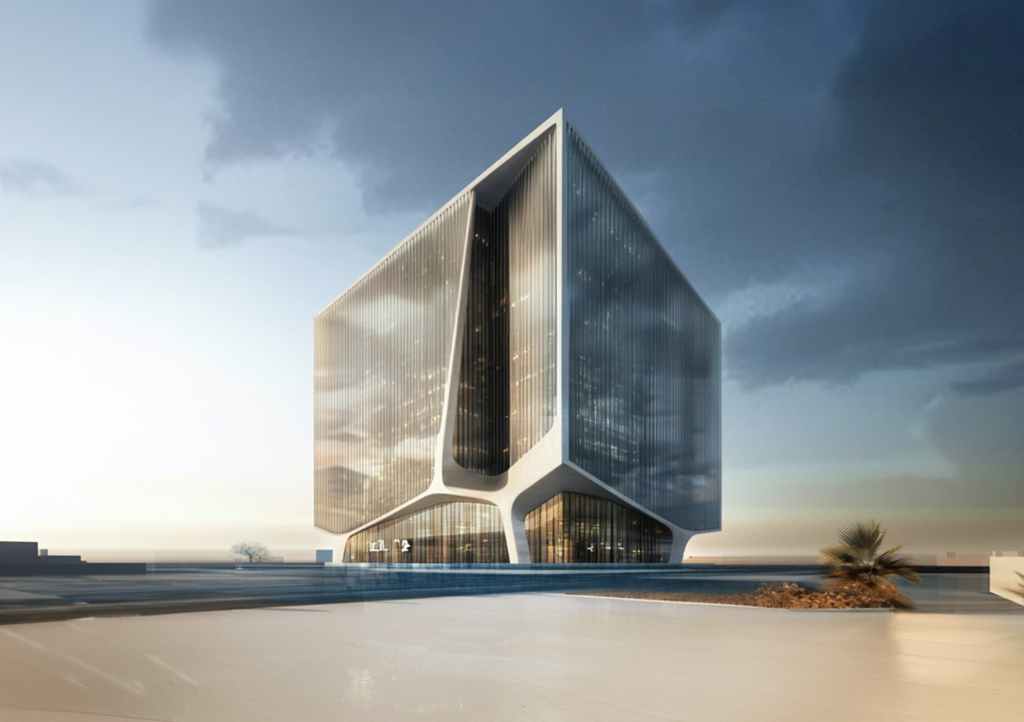
Sharjah has a rich artistic and cultural heritage, and District 11 is designed to reflect and expand that identity. We hope this project shows how technology can enhance cultural specificity. Rather than import a one-size-fits-all typology, we used AI to dig deeper into Sharjah’s DNA and translate that into modern architecture. I see District 11 as a new blueprint for thoughtful development in the Gulf and a new model for livable and experiential neighborhoods all year long despite extreme heat. District 11 introduces something Sharjah has long needed, a fully realized office community that allows residents to no longer have to commute to Dubai. As the city continues to expand, we hope this project sets a precedent for how commercial development can emerge in tandem with values that reflect the desires, needs, and necessities of the users and neighbors.
How do you envision AI’s role in architecture evolving in the next decade? Are we on the cusp of a new design paradigm, or are we still in its infancy?
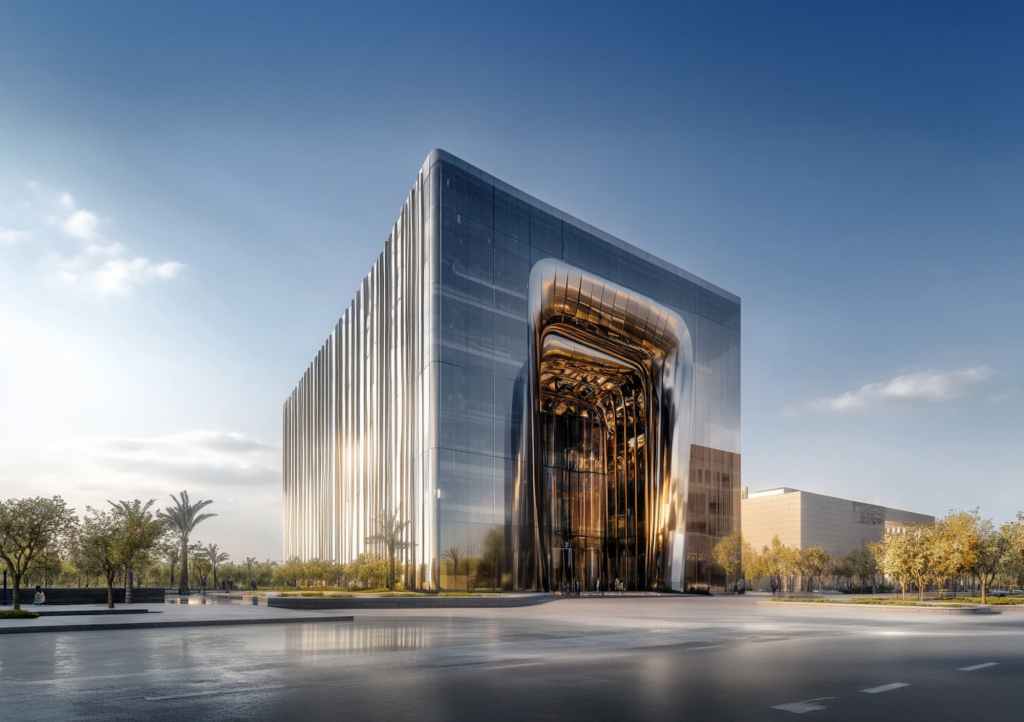
We’re at the start of a new paradigm. What we’re seeing now is just the beginning. Over the next decade, AI will move from being an assistant to a co-creator in every stage of the process. Within the last 2 years, we experimented from reinventing our own way of designing, adding new deep research tools that generated hyper contextual designs, to buildings with personality. The next level we are exploring is designing buildings around experiences and having them be shaped by such. I believe the changes are as radical as 100 years ago, when Modernism emerged in Architecture such as the Bauhaus in Germany. Here the way of designing and the way of building buildings radically changed. I can not foresee the precise role of the architect yet – but we are an awesome and adaptable profession and now we have to design our own future in this ever-changing technological world.