
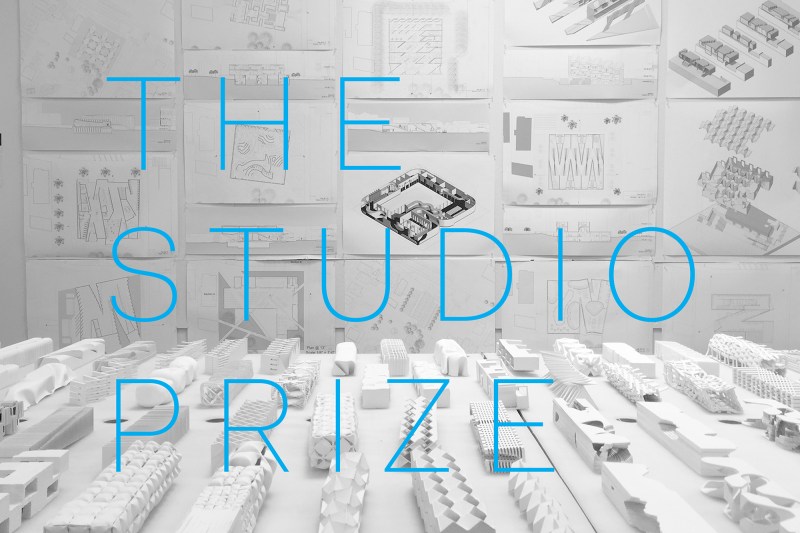
Studio Brief: This second-semester studio for first-year B.Arch. students is a tightly controlled introduction to a wide range of architectural concepts, tools, and skills. By keeping the programmatic focus narrow, students were able to investigate the tectonics of architecture—learning about materials, fabrication, site, and synthesis in one comprehensive course of study.
Investigation: The first year at Woodbury is a skill-building year—one that lays the foundation for competent growth. “We’re preparing students to study architecture from a position of empowerment,” says associate professor Heather Flood, who co-taught the studio with Yi-Hsiu Yeh and Nate Imai. “They’re well-tooled, conceptually and technically, to engage difficult problems later on.”
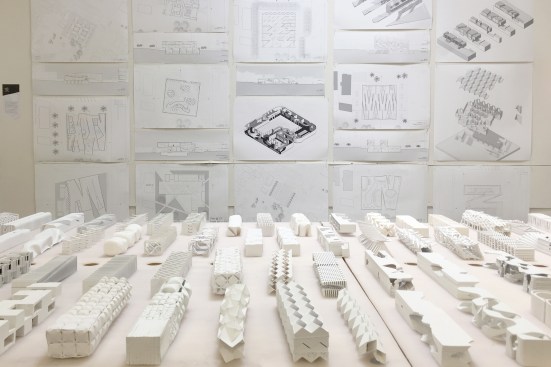
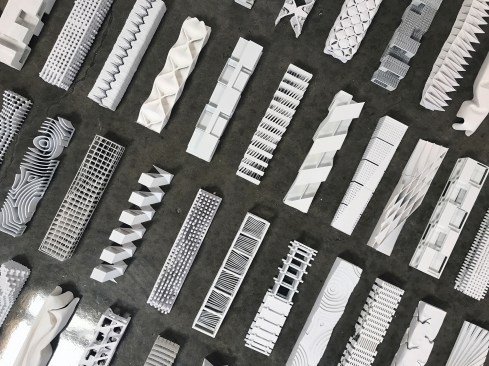
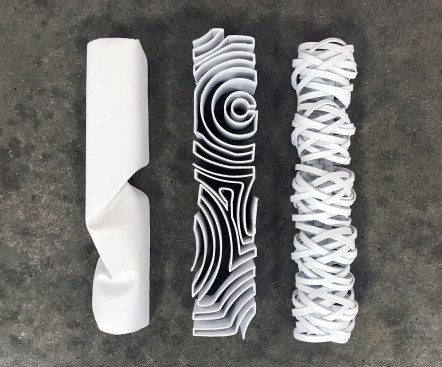
This studio uses the tectonics of structure and architecture to guide the students toward that place of empowerment. The students design a 10,000-square-foot rectangular library, but the focus is less on the end product than the process, which Flood breaks into four phases. First, a material exploration, in which students build three bar-shaped models of the library by hand. Second is fabrication, where the students create models using Grasshopper and digital fabrication. Third, the students incorporate GIS data to produce site plans. Finally, the students create five models based on their newfound understanding and control over tectonics.
“Looking at the way something is made both materially and in terms of construction logics is enough to generate a rich architectural idea,” she says.
The simplicity of this approach impressed the jury. “It was nicely crafted,” said juror Renée Cheng. “You could really see what the students were learning in the series of things they produced.”
Student Work:
Natural Tendencies 1
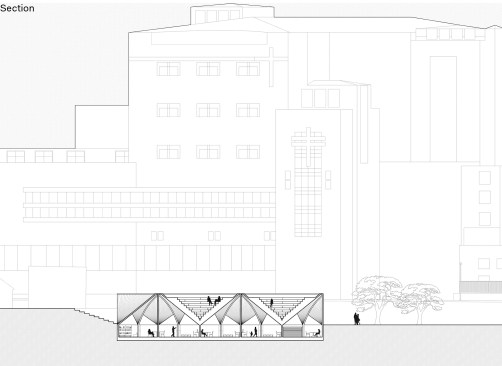
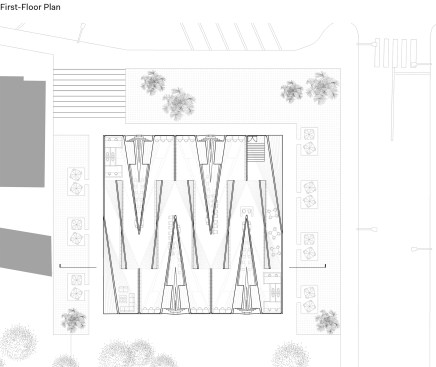
Anahit Antanyan’s plan and section for the 10,000-square-foot community library—sited (as are all the student projects) on Mariachi Plaza in the Boyle Heights neighborhood of Los Angeles—features a series of switchback aisles under a vaulted ceiling. The sloping roof creates occupiable outdoor spaces programmed with seating.
Anahit Antanyan
Anahit Antanyan
Natural Tendencies 2
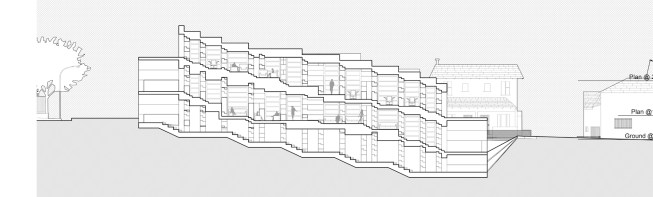
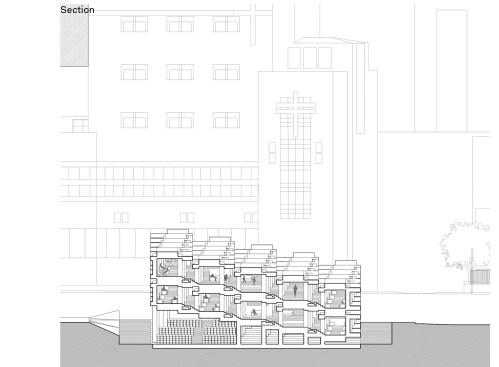
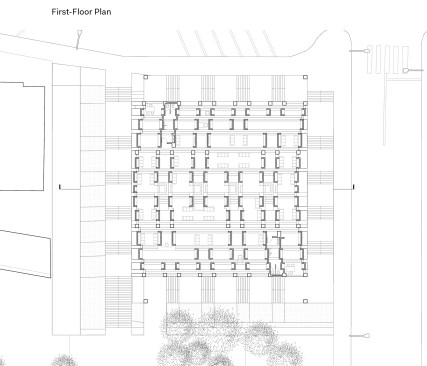
Ulysses Hermosillo’s library has several terraced levels that create an active experience as visitors move throughout the space and provide quiet nooks for reading and study, as well as community gathering.
Ulysses Hermosillo
Ulysses Hermosillo
Ulysses Hermosillo
Natural Tendencies 3
Louiza Chilian’s scheme focuses on public spaces in the ground floor, including a community room, computer station, and café, alongside a children’s reading area. A protruding shade structure marks the entry from the public plaza.

Louiza Chilian

Louiza Chilian
Exhibition of Student Work:
courtesy Woodbury University School of Architecture
courtesy Woodbury University School of Architecture
courtesy Woodbury University School of Architecture
Studio Credits
Course: Natural Tendencies
School: Woodbury University, School of Architecture
Level: B.Arch. (year one)
Duration: Spring 2017 semester
Instructors: Heather Flood (associate professor, visiting faculty); Yi-Hsiu Yeh, Nate Imai (adjunct faculty)
Students: Anahit Antanyan, Louiza Chilian, Ulysses Hermosillo (submitted projects); Adrian Rios, Adriel Navarro, Angel Escobar, Anthony Johnson, Arda Kilickan, Christopher Madrid, Cindy Chilin, Douglas Lopez, Erik Ortiz, Hosam Fatani, Jackely Tejada, Jesse Perez, Juan Devis, Karla Sandoval, Kevin Lugo-Negrete, Kimberly Perez, Lamont Burnley, Madeline Ramirez, Marta Huo, Max M. Perez, Melissa Uyuni, Michael Sanchez, Micol Romano, Patrick Castro, Peter Patpatian, Ricardo Jimenez Mosqueda, Rita Midourian, Rodney Yasmeh, Ryana Rangel, Saul Santizo, Sharece Shabazian, Ulysses Hernandez