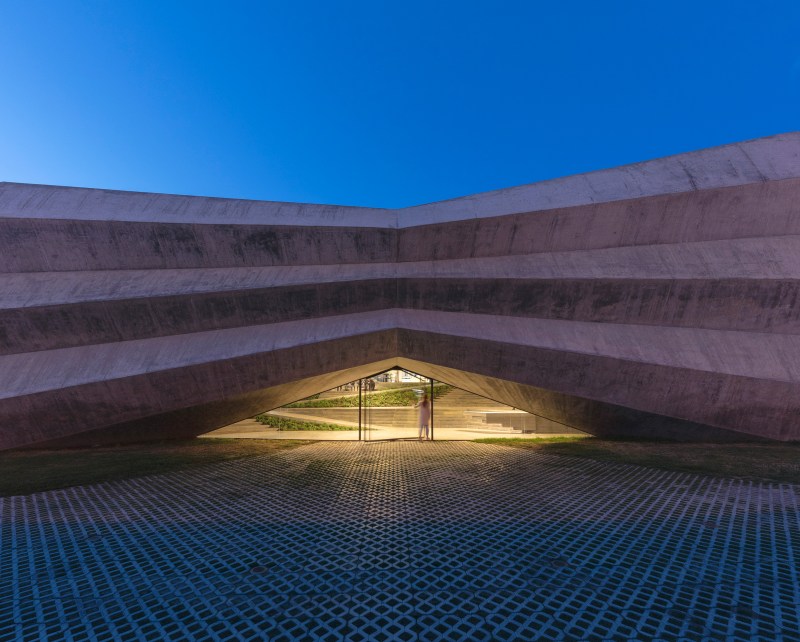
What makes a winning design? Is it the ability to produce that killer image? That seems to be the driving force in the presentation of the kind of “click-bait buildings” I discussed in my last post. Or should something truer to architecture, intrinsic to its methods, materials, and purpose, determine who wins a commission or a competition prize?
The prevailing belief, if I can believe the comments sections whenever any design outlet publishes a snazzy new building, is that the former usually wins out, and all the judges or clients care about is image and hype. Assuming, of course, that the system is not already fixed and rigged by a mysterious cabal of deciders, no doubt in cahoots with the Deep State.
I think the answer is more complex than that. It is true that you have to communicate—if not sell—what you are trying to do as quickly and clearly as possible. But it is rare that such an image is enough to have an impact if it is not based on something beyond its visual composition. I would argue that the “sex shot” both needs to be the culmination of the design work and should bring out its intrinsic merit. Truly facile imagery usually only works after you have gotten the project past a developer or a jury: for instance, when it’s time to sell a building’s units or convince the community of a project’s worth and/or negligible impact.
In case you were looking for more specific hints, there is a continual flood of publications and blog posts that tell you exactly how to win a prize. I thought one post in particular was both thorough and precise, even if it did have a few weaknesses: an essay written by Hannah Feniak to promote Architizer’s awards program.
Khmaladze Architects/NakaniMamasakhlisi Photo Lab
Khmaladze Architects/NakaniMamasakhlisi Photo Lab
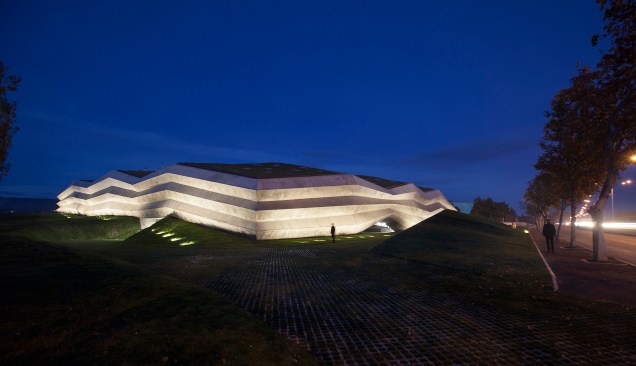
The strength of the piece is that Feniak uses one particular example of a prizewinner and goes into depth as to why it was successful: the Meama Coffee Production Plant in the country of Georgia, designed by Khmaladze Architects, which won no less than five awards in Architizer’s last round.
Feniak breaks the building’s success down to five points. The first of these is indeed “a memorable visual identity.” As somebody who has served on quite a few juries, I have to agree on that point. As you are considering various alternatives for a commission or award, no matter if the pool consists of five or 500 possibilities, the one that not only grabs you with an image but then remains in your consciousness because of the depth of what it represents will stand a good chance. That means that it doesn’t work just to throw in a curve or make the whole project red if the building-as-image doesn’t resonate. As Feniak points out, in the case of Meama, the image comes from an attempt to “think outside of boxiness” for a prominent site in a way that is rooted in program (coffee roasting), the company’s identity, and a sense of place.
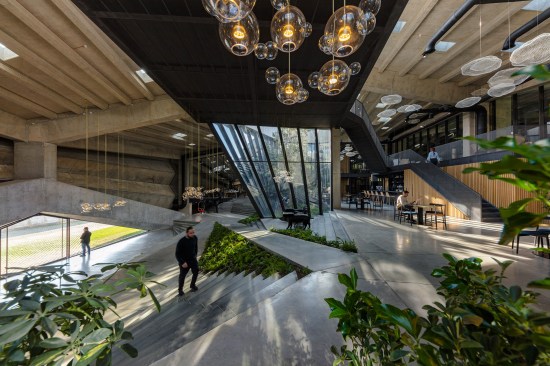
Feniak’s second point is that you have to back up that image by “exhibit[ing] material mastery.” In this case, that means using a concrete ribbon façade and a one-way waffle slab to create a “light-filled and humanistic working environment.” Unfortunately, the photographs that accompany the essay do not really prove the point. In fact, in the third section, “Introduce Spatial Dynamism,” Feniak seems to resort to the clichéd response to the question of how stand-alone buildings gain their pizzazz: through an entrance lobby or atrium that is multistory, preferably skylit, and shot through with as many stairs, ramps, balconies, and landings as the architect can imagine and justify. There is a logic to such a strategy, of course: It is what you see first upon entering a building, and these circulation areas are usually the only programmatic areas that justify expensive spatial and material expression. The danger is that all these atria are beginning to look alike, and it seems that the photographers spend more time in them than the people hurrying to their desks or apartments squeezed into the rest of these boxes.
Khmaladze Architects/NakaniMamasakhlisi Photo Lab
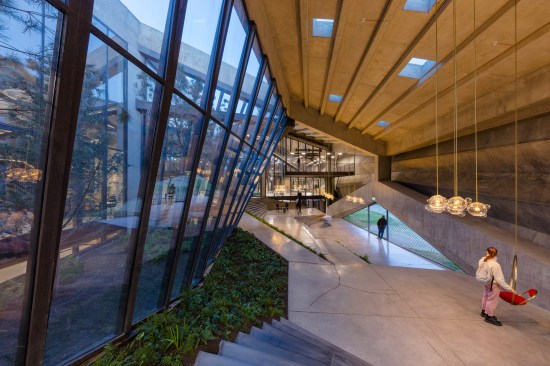
Khmaladze Architects/NakaniMamasakhlisi Photo Lab
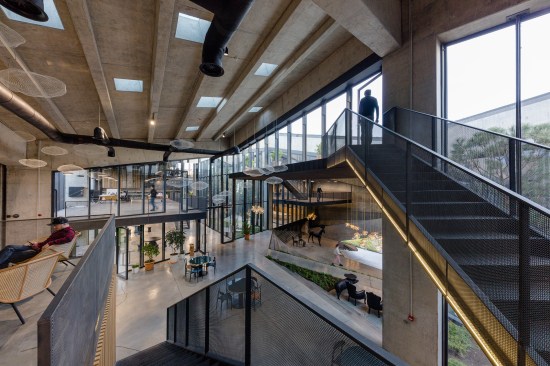
Khmaladze Architects/NakaniMamasakhlisi Photo Lab
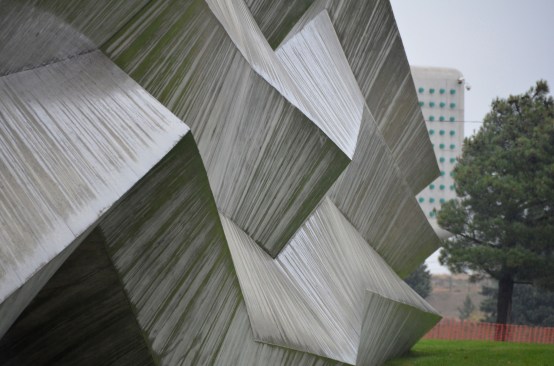
The alternative to putting all of your spatial eggs in that one basket is to “pay attention to detail.” That is absolutely true, I think, but only if the details bridge the connection between the human hand or the scale of the human body and the overall, socially and structurally determined space. Material details are where the building becomes most real for the person experiencing it. With Meama that supposedly happens in the “sculptural appearance” of the concrete and the way “the sun dances over its geometries.” Feniak claims that this effect is enhanced by the textures of the poured-in-place concrete. I have to say that this exactly the kind of detail photographs often do not reveal. Such limitations make it necessary, when possible, for the judges to visit a building, or for competitors to find some way of evoking those experiences, whether in drawings or in words.
Finally, even if the building is prize-worthy in all these ways, it is still necessary to “consider the environmental impact.” That fact that Feniak puts this criterium last and divorces it from other social necessities, such as the way a project contributes to the site and to the community, is telling. Architects tend to have the most trouble making anything of their buildings beyond just serviceable structures, and find themselves continually arguing for issues such as sustainability and social justice only after they have answered all the demands of function and budget. At least I think they should take this kind of activist stance towards their work as a designer, but most architects would also say that they are working within a service profession whose prime responsibility is to serve the needs of the clients.
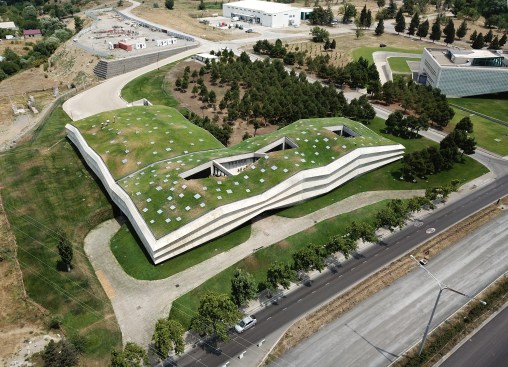
Khmaladze Architects/NakaniMamasakhlisi Photo Lab
That is why competitions, whether in pursuit of a commission or an award, remain important. Yes, they might rely on images too much, and yes, personalities can sometimes trump design. The mechanism can also feed into an exploitative work system that often pits architects against each other in unpaid competitions. But this system is also one of the few ways to reward good architecture, which is to say creating inhabitable structures that serve as our home in our modern world, that contribute to its preservation and accessibility to all, and that are also beautiful. Perhaps it takes more than five steps, and perhaps the “why” should come before the “how,” but thank heavens there is some reason for architects to design something more than the kind of dumb, functionable boxes that would otherwise be the cheap and easy solution to a commission.
Aaron Betsky is a regularly featured columnist whose views and conclusions are not necessarily those of ARCHITECT magazine nor of the American Institute of Architects.