
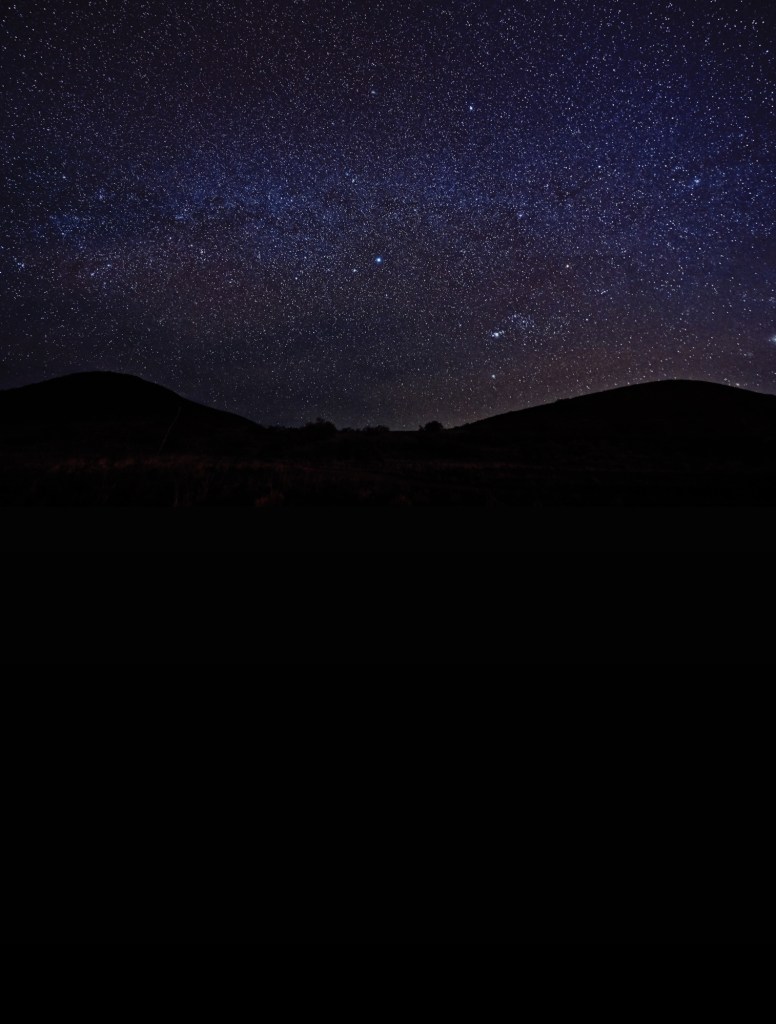
Light Pollution and the Night Sky

Awareness and preservation of the non-illuminated landscape.

1 MIN READ

Herbert Heinsche

In our increasingly illuminated world and rapidly expanding urban centers, one of our greatest challenges is managing light and maintaining areas so that low light levels, even darkness, can be achieved in desired areas. In fact, the study “World Atlas of Artificial Night Sky Brightness” published in the open access journal Science Advances in June 2016 found that “80 percent of the world’s population lives under light-polluted skies. The United States and Europe have it the worst, with 99 percent of their denizens experiencing sky glow at night.”

Light pollution, defined as “the wasteful upward light from electrical sources that is scattered in the atmosphere and reflected back to Earth,” is just as serious as any other type of pollutant. One group that has been working to keep the balance between light and darkness in check is the International Dark Sky Association (IDA). Established in 1988 and made up of astronomers and environmentalists, it is “dedicated to protecting the night skies for present and future generations.”

The IDA acts as an “advocate for the protection of the night sky” and works with a variety of constituencies that have an interest in the illuminated landscape, everyone from members of the public to city planners, from policy makers to lighting designers and lighting manufacturers, from the National Park Service to environmental activists. To date, through its International Dark Sky Places conservation program launched in 2001, the IDA has certified more than 65 Dark Sky Places around the world, across six continents, totaling 58,000 square kilometers (21,200 square miles). A small percentage of the Earth, but a start to preserving the night sky, a critical component in how we think about the illuminated—and nonilluminated—world.

Explore all 30 Moments in Lighting from our 30th Anniversary Issue here.

About the Author

Elizabeth Donoff

Elizabeth Donoff is Editor-at-Large of Architectural Lighting (AL). She served as Editor-in-Chief from 2006 to 2017. She joined the editorial team in 2003 and is a leading voice in the lighting community speaking at industry events such as Lightfair and the International Association of Lighting Designers Annual Enlighten Conference, and has twice served as a judge for the Illuminating Engineering Society New York City Section’s (IESNYC) Lumen Award program. In 2009, she received the Brilliance Award from the IESNYC for dedicated service and contribution to the New York City lighting community. Over the past 11 years, under her editorial direction, Architectural Lighting has received a number of prestigious B2B journalism awards. In 2017, Architectural Lighting was a Top Ten Finalist for Magazine of the Year from the American Society of Business Publication Editors' AZBEE Awards. In 2016, Donoff received the Jesse H. Neal Award for her Editor’s Comments in the category of Best Commentary/Blog, and in 2015, AL received a Jesse H. Neal Award for Best Media Brand (Overall Editorial Excellence).Prior to her entry into design journalism, Donoff worked in New York City architectural offices including FXFowle where she was part of the project teams for the Reuters Building at Three Times Square and the New York Times Headquarters. She is a graduate of Bates College in Lewiston, Me., and she earned her Master of Architecture degree from the School of Architecture at Washington University in St. Louis.

No recommended contents to display.

Upcoming Events

  • Design Smarter: Leveraging GIS, BIM, and Open Data for Better Site Selection & Collaboration

    Live Webinar

    Register for Free
  • Slate Reimagined: The Surprising Advantages of Slate Rainscreen Cladding

    Webinar

    Register Now
  • The State of Residential Design Today: Innovations and Insights from RADA-Winning Architects

    Webinar

    Register for Free
All Events