


Project Description
“We knew that any technology has assumptions built in, and we started realizing that machine learning might be particularly dangerous because the assumptions are more biased—sometimes even from their own inventors,” Benjamin says. “With less direct programming or open-ended programming, the algorithm learns on its own.” This aspect of machine learning is particular troubling, he notes, in certain sensitive areas such as serving up job ads or even judicial sentencing, where unintended discrimination by race, ethnicity, or gender can have far-reaching consequences.
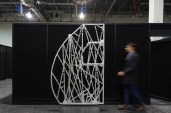
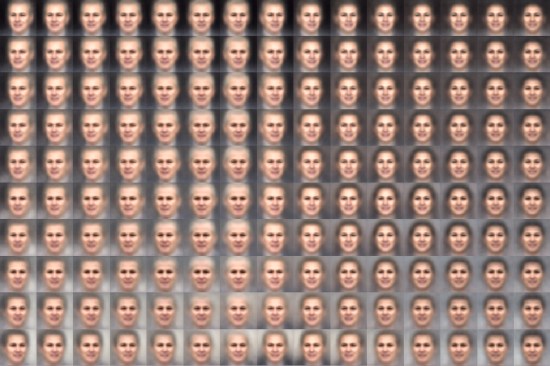
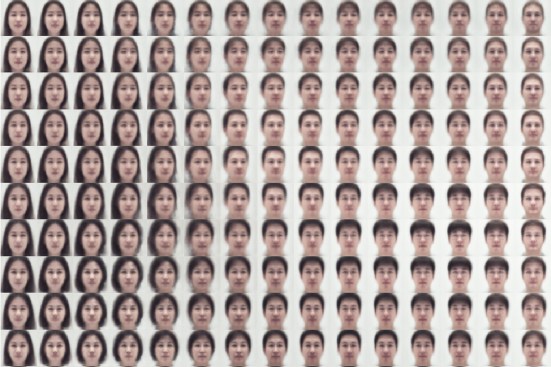
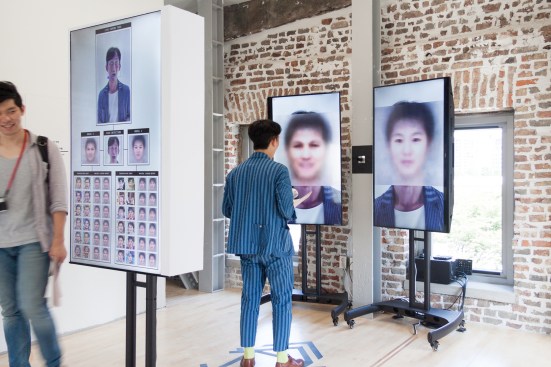
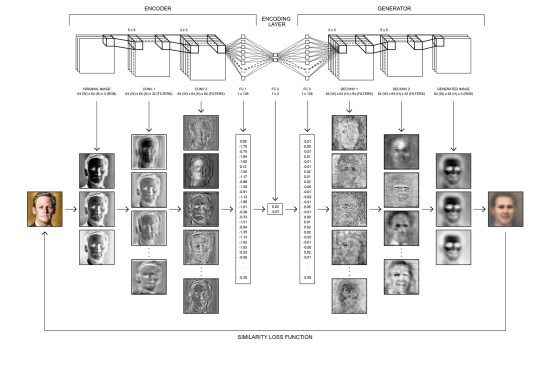
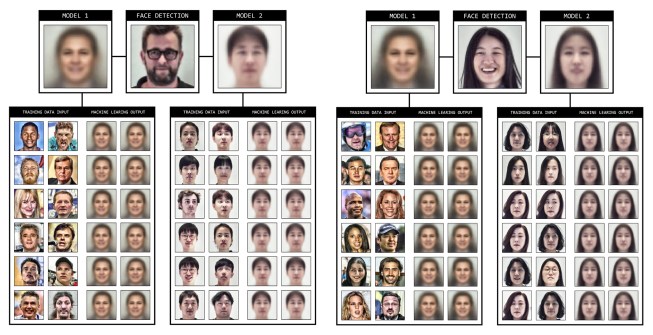
To demonstrate these potential issues, The Living created an installation for the 2017 Seoul Biennale of Architecture and Urbanism that scans the face of a visitor and runs it through two parallel facial recognition models that are trained on different sets of stored head shots. The different models and sets of training data result in two distinct results for any given visitor. “We’re basically creating two versions of reality, of machine learning, to say they’re both just interpretations and neither one is objective or correct, so we have to understand a little more about properties of each one,” Benjamin says.
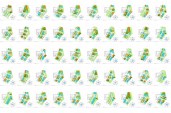
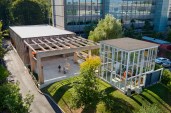
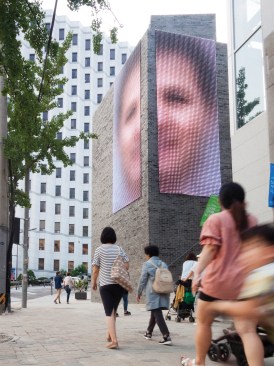
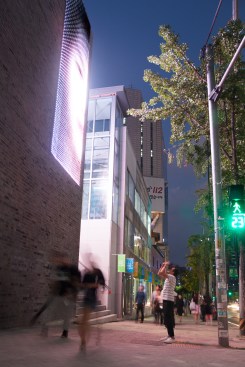
The images generated by the facial recognition software were displayed via live feed on a media façade mounted on the exterior of a building in a busy pedestrian zone. “We’ve done this whole line of research thinking about buildings coming to life to show environmental qualities, but we also thought we could use façade to talk about discrimination in our society or assumptions and bias in new technologies.”
Project Credits
Project: Twin Mirror, Seoul, South Korea
Client: Seoul Biennale of Architecture and Urbanism
Project Team: The Living, New York . David Benjamin (founder and principal); Danil Nagy, Jim Stoddart (project leads); John Locke, AIA, Dale Zhao, Damon Lau, Ray Wang, Lorenzo Villaggi
Biennale Directors: Hyungmin Pai, Alejandro Zaera-Polo
Machine Intelligence: Mike Haley
Twin Mirror was made possible, in part, by funding from Columbia University Graduate School of Architecture, Planning and Preservation. The project was also supported by Viss Display Co.
To see more projects from The Living, see our Q+A with David Benjamin from the January 2018 issue of ARCHITECT, part of What’s Next: Reprogramming Practice.