Project Description
Expanded Coverage of the 2020 COTE Top 10 Awards appeared in the October 2020 issue of ARCHITECT.
This Skid Row Housing Trust project provides permanent supportive housing for formerly homeless veterans in an environment that integrates sustainable approaches to health, wellness, and budget.
Interview by Katie Gerfen
What are some of the design goals for The Six?
Angela Brooks, FAIA, principal: We were trying to make a very dense project, but we wanted to design something that felt open, and that was nurturing for the people who live here. Every time we design a building that’s six stories and below, it’s passive, with natural ventilation and daylight in every unit—that basically means you have to design a courtyard building. So, you have a connection to natural light, you have open space and circulation, but you also give people different ways to be outside and to circulate. You don’t force them to do something.
Tight budgets are a hallmark of affordable housing projects. How did you strategically decide what to prioritize?
By not being so prescriptive with the structure of the building, we were able to be more cost-efficient with it. By having my structural engineer design the performance spec and letting the contractor have his subcontractor design it in the most cost-effective way, we saved money. And it’s not something I or my structural engineer would have ever designed.
One method of savings is a low- or no-maintenance building. How did you prioritize?
With our stucco buildings, when use colors, they are integral pigments. The concrete is always exposed concrete. It’s a win-win, because it saves on the environment, but it also saves money for the client. And a lot of things do that. If you have a building that is designed passively, and you can open your windows, and you don’t need to turn on your air conditioning, then that saves money and maintenance. It’s thinking about things smartly.
What are some of the lessons learned?
The biggest thing that surprised me is on the energy side. We were trying to get our EUI really low and we had a hard time. Once I got the actual data, I was surprised at how much more water and energy were being used than I originally anticipated. What I realized is that permanent supportive housing uses more energy. Lights are on more frequently, and maybe people run their air more because they don’t want to open their window for whatever reason. These are people who need help, and helping them is more intensive. These projects are doing a lot more than just providing housing.
Metrics Snapshot:
ECONOMY
Mandatory Metrics
Cost per square foot: $254
Explain how building size was managed to comply with budget and meet operating requirements: Buildings with smaller units cost more and use more energy and water (due to a higher fixture count and higher tenant density). We utilize an in-house matrix of unit sizes that are just above the minimum allowed by the State of California Tax Credit Allocation Committee, the funding arm of this housing type. We have flagged “too large” minimums in the past, and TCAC has further reduced requirements, ensuring efficient minimum sizes.
Encouraged Metrics
Comparable cost per square foot for other similar buildings in the region: Cost/sq ft + commercial prevailing wage = $300/sq ft
How did design choices minimize materials, allowing for lower cost and more efficiently designed systems/structure? By utilizing a wood-framed prefab system of roof and wall-truss framing, and design-build floors with performance specifications, we were able to save cost, lower the carbon footprint, and save time in permitting.
Life Cycle Analysis of the costs associated with measures taken to improve performance: Hot water panel solar system cost of $96,000 has a payback time of less than five years. Common boiler, combined multi-unit mechanical equipment, and master-metering contribute to shorter payback.
Water savings of approximately 30% above average due to low-flow fixtures equates to substantial cost savings for both utility domestic and sewer water rates. Payback time is less than one year due to the low cost of these fixtures.
For a full list of metrics, visit aia.org.
2017 Residential Architect Design Awards
Affordable Housing | Award
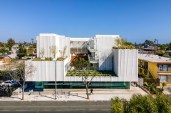
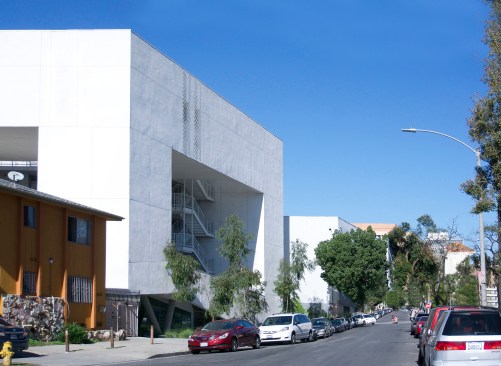
The five-story-tall apartment complex dubbed The Six is a stunning new presence near MacArthur Park in Los Angeles. Designed by local firm Brooks + Scarpa, the building provides 52 units of architecturally distinguished affordable housing for disabled veterans.
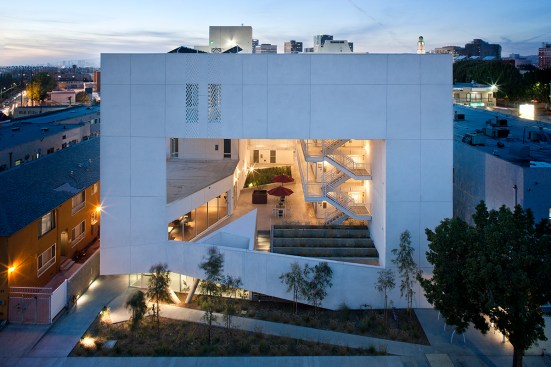
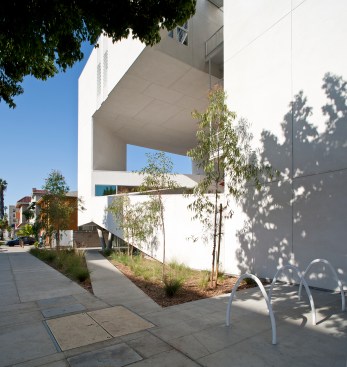
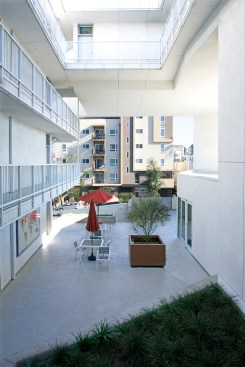
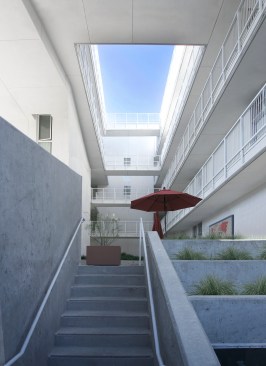
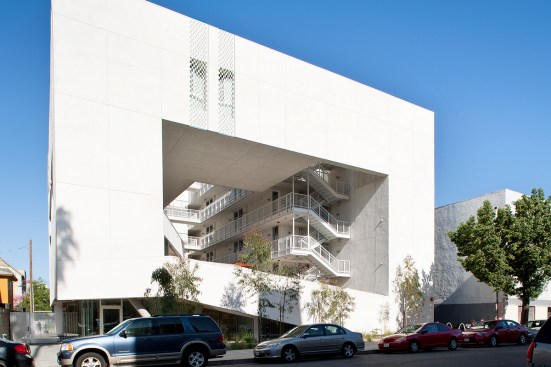
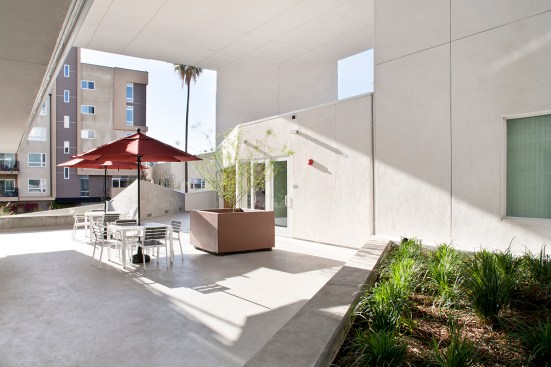
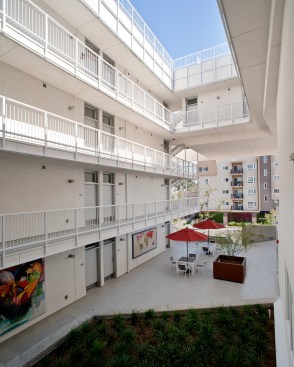
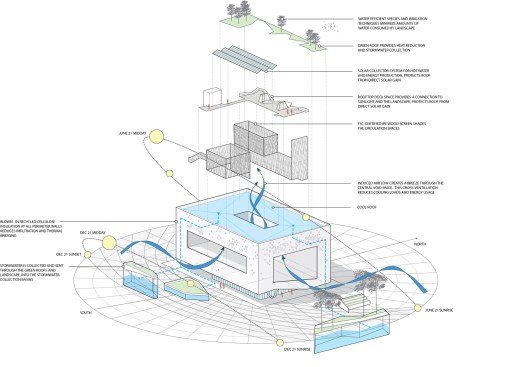
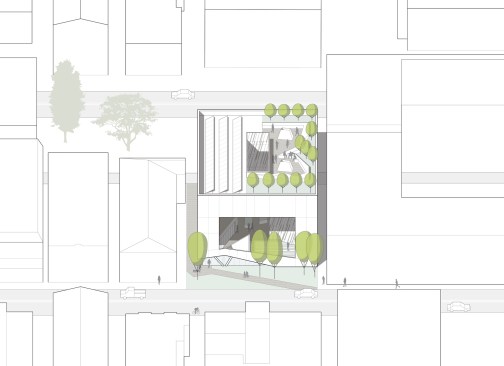
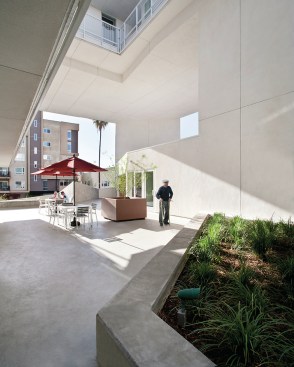
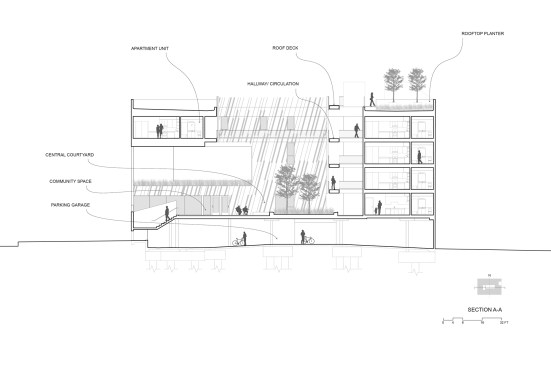
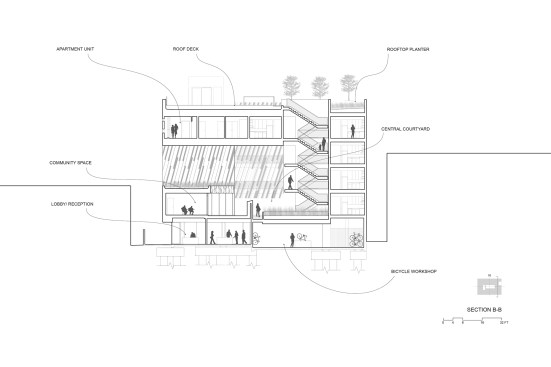
The 18,390-square-foot structure is configured as a courtyard plan, with apartments on floors two through five facing a shared, protected interior space. Public circulation is along single-loaded exterior walkways overlooking the courtyard, with a modified L-shaped plan on floors three and four, and a full doughnut layout on the fifth floor. The varied plans allow for multistory cutouts in the building’s volume on the east and south sides of the structure, which provide cross ventilation in the courtyard and, combined with the roof opening, induce breezes through the central void.
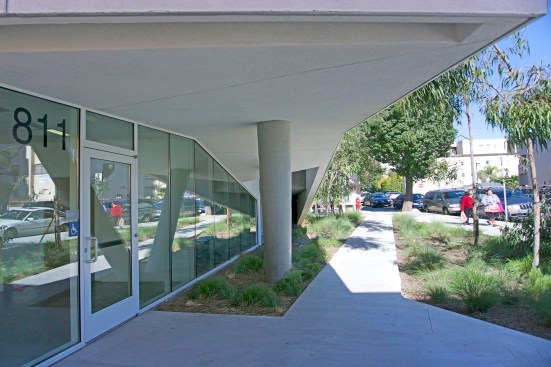
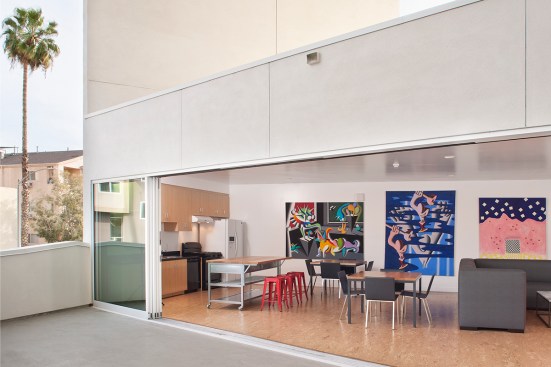
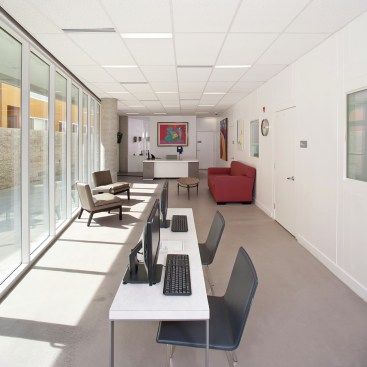
The public amenities are tailored to enhance the building’s sense of community; encouraging residents to occupy shared interactive spaces rather than be reclusive in private apartments. “This project captures the spirit of community space incredibly well,” Katherine Chia said. The first-floor reception area is adjacent to veterans support spaces, offices, bike storage, and covered parking. A community room on the second floor, adjacent to the courtyard, provides a light-filled exterior gathering space, and protected exterior spaces are reprised on the rooftop.
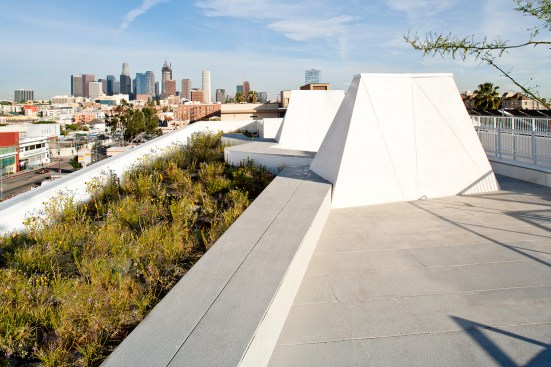
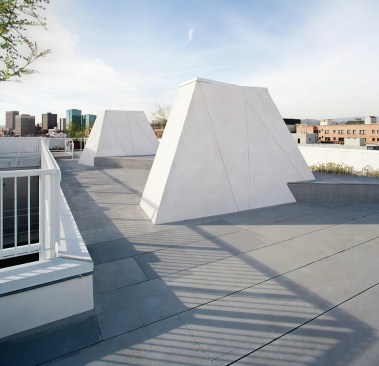
Many of the Six’s sustainable strategies are driven by the concept of the volume’s form enhancing natural ventilation in the balmy Southern California climate. The LEED Gold certified design includes a green roof, stormwater collection, and photovoltaic panels on the roof that both provide hot water and produce energy for the building. —Edward Keegan, AIA
Visit ARCHITECT to see the rest of the winners of the 2017 Residential Architect Design Awards.
2017 AIA Institute Honor Award Winner in Architecture
The Six, a new affordable housing project in Los Angeles’ MacArthur Park neighborhood, is, at first glance, a bit of a formal puzzle. As seen from the east, with its giant opening into a courtyard, the newest building for the Skid Row Housing Trust looks like a big white Möbius strip, a beguiling sequence of balconies, stairways, and overlooks. Yet all this aesthetic complexity serves a very important purpose: The building’s 52 below-market-rate apartments are reserved for disabled veterans, and the scheme, from local architects Brooks + Scarpa, is in fact a carefully crafted system for fostering a sense of community.
Connecting the apartments to one another, to the open landscaped areas (including a rooftop vegetable garden), and to a host of shared amenities like bike storage and meeting rooms, the building’s involved circulation patterns and irregular envelope encourage residents to interact with one another and with their environment, with the intent of fostering the kind of supportive culture too often absent from the veteran-care experience. With eco-sensitive features like low-flow water fixtures and passive ventilation, the architects have gone a step further in making the building a community asset. The area around MacArthur Park has historically been one of Los Angeles’ poorest and most crowded, with a high concentration of homeless. Rather than add one more social problem spot to an already ailing area, the Six helps veterans get off the street, while adding a striking presence to the neighborhood. —Ian Volner
Project Credits
Project: The Six Affordable Veteran Housing, Los Angeles
Client: Skid Row Housing Trust
Architect: Brooks + Scarpa, Los Angeles
Structural Engineer: John Martin & Associates
M/E/P Engineer: Innovative Engineering Group
Civil Engineer: Barbara L. Hall
Specifications: Phil Easton
General Contractor: Golden Bear Construction
Landscape Architect: Brooks + Scarpa; LandStudio 360
Size: 18,390 square feet (gross conditioned floor area)
Cost: $10.1 million (construction, excluding furnishing)
To see the rest of ARCHITECT’s coverage of the 2017 AIA Institute Honor Awards, click here.
This project is a winner of a 2020 AIA COTE Top Ten Award.
From the AIA:
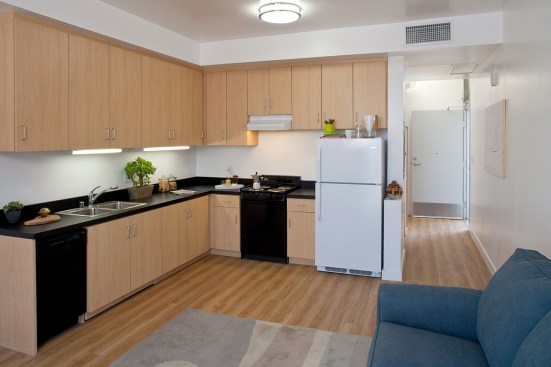
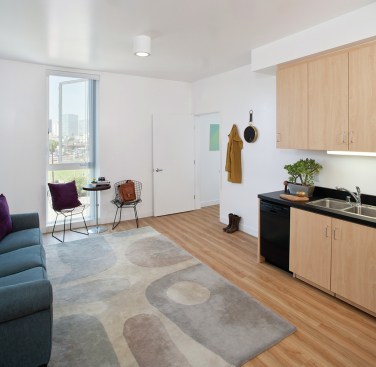
The Six, a 52-unit affordable apartment building, consists of 45 studios and seven one-bedroom apartments along with a second-floor recreation and laundry room, ground-floor offices, support services, computer lab, and on-grade parking for previously homeless and disabled veterans. Veterans constitute a disproportionate amount of the homeless population in the US. In Los Angeles, veterans comprise about 11 percent of the total homeless population. The tenants are generally older and have both physical and mental disabilities; therefore, the building’s operation was expected to be similar to special needs/assisted living.
Design of The Six emerged from close consideration of passive design strategies, including shaping and orienting the building for natural ventilation and designing windows to maximize daylighting. Solar panels are utilized to heat domestic hot water. Based on the Title 24 Energy Analysis for The Six, the building was 35 percent more efficient than California's Energy Code, which is substantially better than the national average.
The design deemphasizes a reclusive, isolating layout in favor of a community-oriented, interactive space. A large courtyard orients tenants to social and public spaces and provides a secure circulation space from the street to their apartment. At a density of 152 units/acre, the roof provides a quiet refuge for tenants, incorporating landscaping with trees, seating, and panoramic views of the neighborhood.
Located on a previous parking lot, The Six is infill housing in a multifamily neighborhood called MacArthur Park, which has one of the highest densities in the US with over 38,000 people/square mile and a total population of 120,000 people in 2.72 square miles. This neighborhood is a “walker's paradise,” with a 96 Walk Score and is near excellent transit and bike lanes. Most of the veterans that live here do not own cars and can easily accomplish their daily activities without one.
This project is a winner in the 2017 AIA Housing Awards in the Specialized Housing category.
FROM THE AMERICAN INSTITUTE OF ARCHITECTS
The SIX is a LEED Platinum 52-unit affordable housing project provides a home, support services and rehabilitation for previously homeless and/or disabled veterans. It is located in the MacArthur Park area of Los Angeles. McArthur Park has one of the highest densities in the USA with over 38,000 people per square mile. Offering shelter and comfort, The SIX breaks the prescriptive mold of the traditional shelter by creating public and private "zones" in which private space is deemphasized, in favor of large public areas. The organization of the space is intended to transform the way people live-away from a reclusive, isolating layout towards a community-oriented, interactive space. The project distinguishes itself from most conventionally developed projects in that it incorporates energy efficient measures that exceed standard practice, optimize building performance, and ensure reduced energy use during all phases of construction and occupancy.
FROM THE ARCHITECTS:
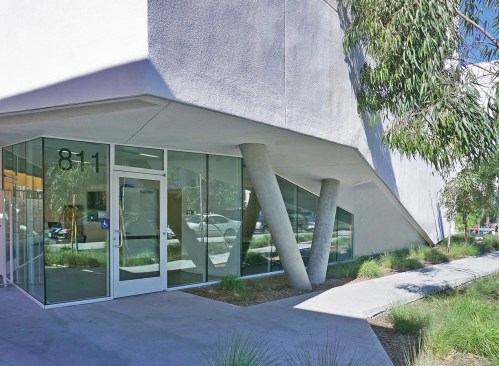
The SIX is a 57-unit affordable housing project provides a home, support services and rehabilitation for disabled veterans. It is located in the MacArthur Park area of Los Angeles. McArthur Park has one of the highest densities in the USA with over 38,000 people per square mile and a total population of 120,000 people in 2.72 square miles. Offering shelter and comfort, the SIX breaks the prescriptive mold of the traditional shelter by creating public and private "zones" in which private space is deemphasized, in favor of large public areas. The organization of the space is intended to transform the way people live-away from a reclusive, isolating layout towards a community-oriented, interactive space. The ground level contains offices, support spaces for the veterans, bike storage and parking while the second level has a large public courtyard. Surrounded by four levels of housing units with balconies wrapped with a wood screen made from recycle planking the courtyard has large openings with green roofs that visually connects the space to the street on the lower level beyond. This allows the tenants to enjoy a secured open space while still connecting to the larger community. The uppermost level has a green roof, large public patio and edible garden with panoramic views of the area. The SIX distinguishes itself from most conventionally developed projects in that it incorporates energy efficient measures that exceed standard practice, optimize building performance, and ensure reduced energy use during all phases of construction and occupancy. The planning and design of Step Up on 5th emerged from close consideration and employment of passive design strategies. These strategies include: locating and orienting the building to control solar cooling loads; shaping and orienting the building for exposure to prevailing winds; shaping the building to induce buoyancy for natural ventilation; designing windows to maximize day lighting; shading south facing windows and minimizing west-facing glazing; designing windows to maximize natural ventilation; utilizing low flow fixtures and storm water management; shaping and planning the interior to enhance daylight and natural air flow distribution. These passive strategies alone make this building 50% more efficient than a conventionally designed structure.