
Project Description
This student project was completed in The Radical and The Preposterous: Mind the Gap, a studio course at the University of Michigan A. Alfred Taubman College of Architecture and Urban Planning which won a 2016 ARCHITECT Studio Prize.
FROM THE PROJECT TEAM:
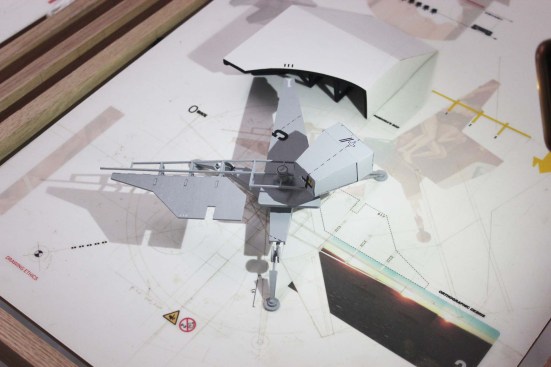
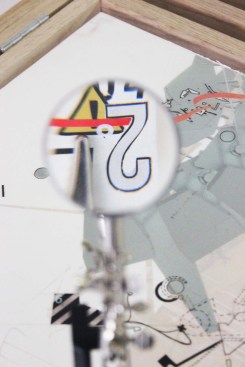
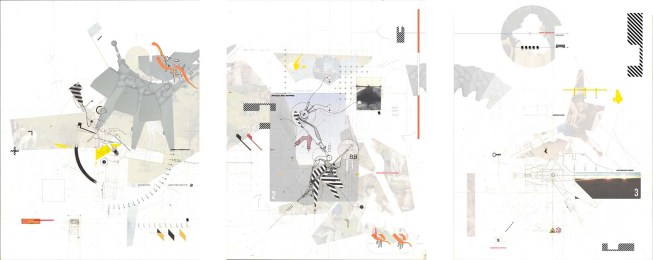
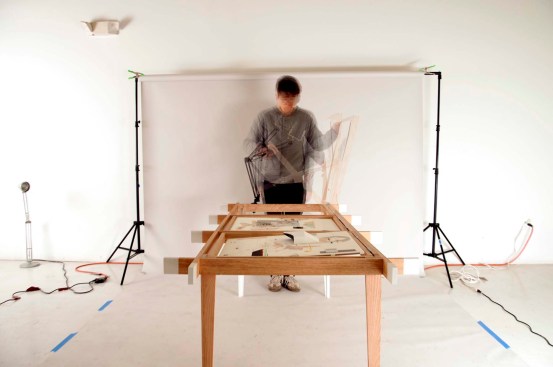
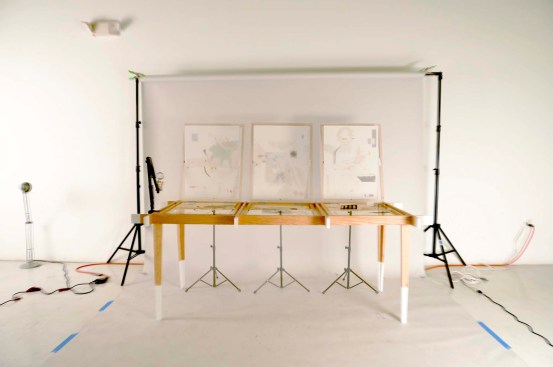
TAB(U)L(A)E is an exploration of post-digital drawing futures through the production of discursive imagery. The images produced respond to societal issues that consider technology, ethics, prosthetics, and sites of destruction due to war and climate change, while acknowledging a phenomena of association between analog modalities of production and the horizontal work-space, and digital modalities of production and the vertical work-space. Through the TOGGLE, an act of moving between modalities and orientations facilitated by the TABLE, the work ensues but also enables the possibility for an abstraction; a TABULA by which this cultural production becomes intelligible.
The dichotomy of the [horizontal TABLE/vertical TABULA] draws from the reference and study of Diderot and d’Alembert’s "Encyclopédie" and Leo Steinberg's "Other Criteria: Confrontations with Twentieth Century Art" found in Amy Catania Kulper's essay, “Representing the Discipline: The Operations of Architecture’s Discursive Imagery.” Through "Encyclopédie", the relationship between the horizontal and vertical is understood as one of production vs. abstraction. The TABLE persists as the work-space, the site of production, while the TABULA organizes and makes legible the product by organizing, delineating, and abstracting the tools and components of the TABLE. Steinberg's definition of aesthetic address, as studied through the scope of the flatbed printing press, expresses that the quality of being produced "in the horizontal" can maintain as work moves to the vertical plane. This retention of the legibility of production enables an accessibility to the vertical presentation of the content, maintaining the reference points to the tools and processes of making as the shift in orientation changes the character of the work from one of production to one of presentation.
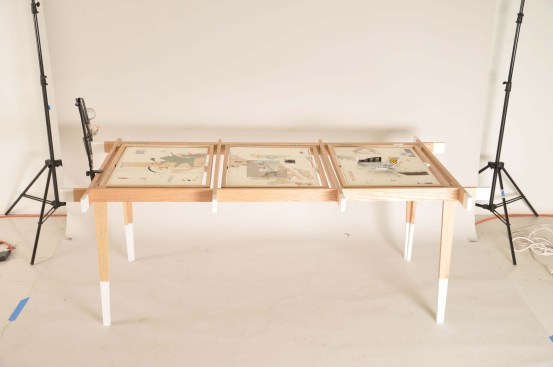
Through the course of this study, a series of questions persevere, dictating the course of the investigation: Is it possible to produce the work on the table, to stage conversation as others gather around the table, to contribute to the production in the vertical orientation (as is dictated by the digital) and to enable one to access the content of the work produced in the horizontal (on the table) in the vertical orientation of presentation?
The role of the TABLE in TAB(U)L(A)E is to enable the production of the drawing and attempts to produce the site for the production of abstraction, the TABULA, by enabling the ability to TOGGLE between the disciplinary roles of the horizontal and the vertical in drawing.