Project Description
Japandi is a hybrid union of Japanese and Scandinavian aesthetic approaches appreciated for its exceptional craftsmanship, simplicity and minimalism, reverence for nature and sustainable materials, and the beauty of embracing imperfection. This union evokes a visual and physical sense of calm and tranquility.
The artistic kinship stretches back a century and a half ago when Japan’s closed border policy was lifted in 1858 and Danish designers and creatives began traveling to Japan. Early influence can be seen in ceramic crafts, architecture, and Danish furniture. After World War II, the Japanese government began promoting cultural exchange among designers and artists from Scandinavia.
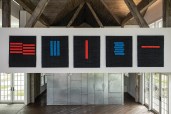
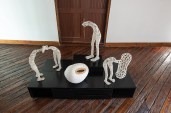
Artists of Fiber Art and Modern Craft uniquely embody principal elements of Japandi style – from their use of natural materials and neutral color palettes to the fundamentally “slow art” process of hand craftsmanship.
Their processes and materials are invoked with an intrinsic sense of contemplation, tranquility, and harmony that reverberates through their work and into the spaces the artworks inhabit.
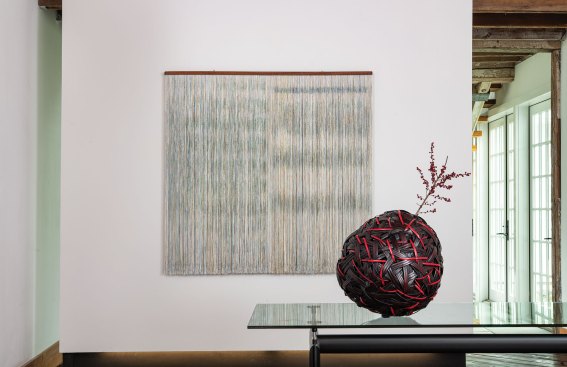
Works made of soft materials such as linen, cotton, or wool are handwoven in meticulous detail act as textural counterpoints, adding warmth and calm in modern interiors. Both cultures make room for reuse, artful imperfection, and comfortable simplicity, through the Japanese concept of wabi-sabi and the Scandinavian idea of hygge.
Unique basket forms may be made of bamboo, willow, cedar, or their earthly “scraps” such as branches, grasses, bark, and twigs. Materials come from regionally or locally sourced plant life or even backyard cultivation.
“Our curatorial decisions were informed by an appreciation for integrating nature and natural materials, a near-reverence for exquisite craftsmanship, an admiration for repurposing, a respect for old and cherished items and a preference for neutrals and primary colors, clean lines and under-ornamentation — all identified as elements of the Japandi approach.” – Rhonda Brown and Tom Grotta, founders of browngrotta arts