








Project Description
FROM THE ARCHITECTS:
Context
The project could be considered as daring because of its site
proportions, a long but very narrow strip of land (7.5 X 40 M) with a blind
wall on one side.
Concept
The house was built for a family of 4, in order to protect
its members and meet the needs as best as possible.
Due to the
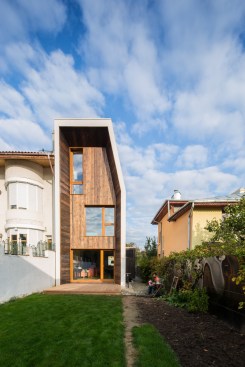
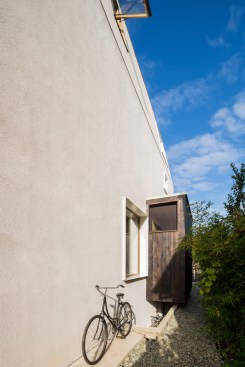
shape of the site and its surroundings, the house
resulted as a long and 4.5 m narrow shape, attached
to the neighbours blind wall. The facades and the layout of the house were
built according to their position towards the public or private areas of its surrounding
and the cardinal points.
The facades
and the layout of the house had different approaches, given the orientation
towards the public or private areas of the surroundings and the cardinal
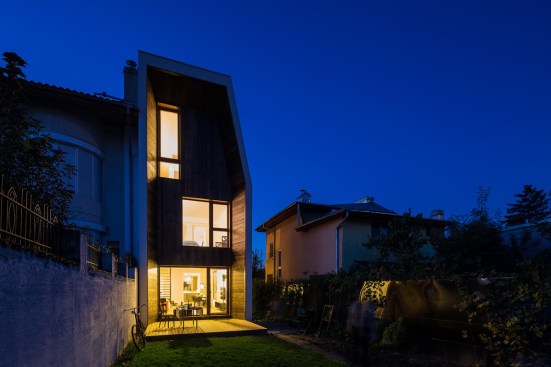
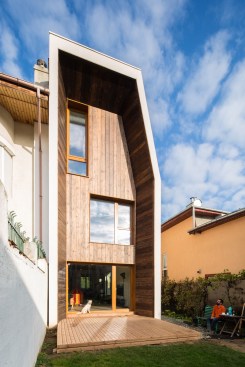
points. The best example would be the southern facade, moulded to work as a sun
trap.
Layout
The house was built so that it would have a small
frontyard which provides entrance from the street, as well as a larger private
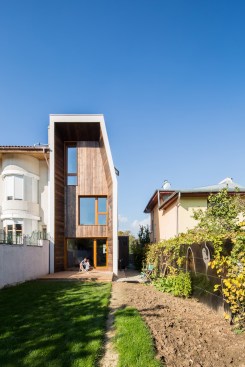
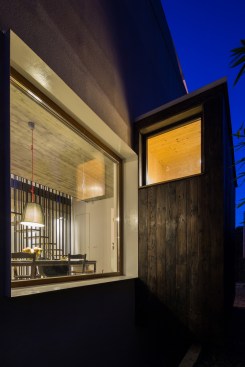
backyard. The acces point inside the house is signaled by a burnt wooden box, the
vestibule, attached to the white main volume of the house, thus creating a visual
contrast.
This project was build with consideration towards
the main principles of passive housing.
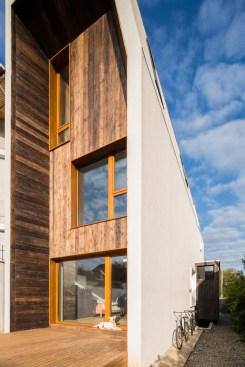
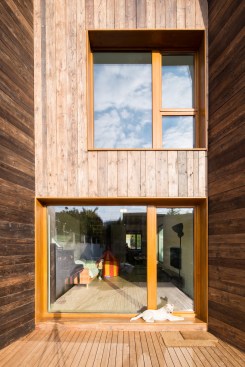
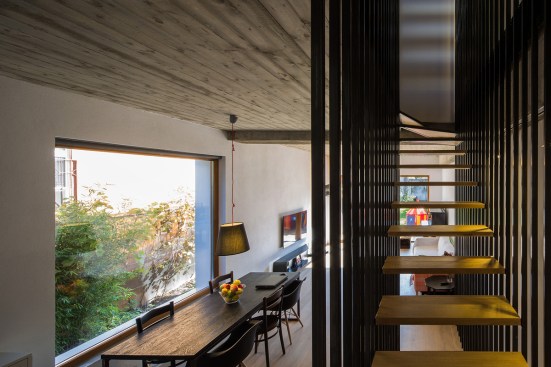
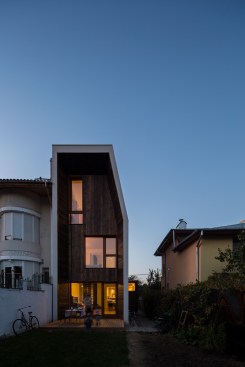
The southern facade opens large windows towards the
private family backyard, without forgetting to shield itself from the sun. It
uses passive shading creating a funnel shaped facade and a pergola. The main
material used for the backyard facade is burnt wood. The image created is harmoniously
integrated with the protected intimate garden, due to its organic refference
and induced warmth.
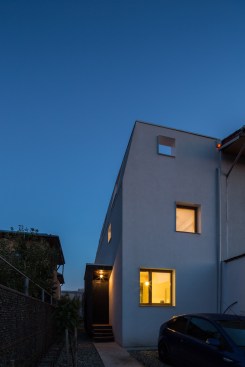
The facades facing the street (North) and the
neighbour on the left (East), due to the nearing position providing little
privacy, are more opaque and sober. On all of the facades, the windows are
larger at the bottom and smaller at the top, as to capture the right amount of
light for each space.
The layout
of the house uses the same principle as the facades, considering the position
of the space towards public or private outlook, and the amount of received natural
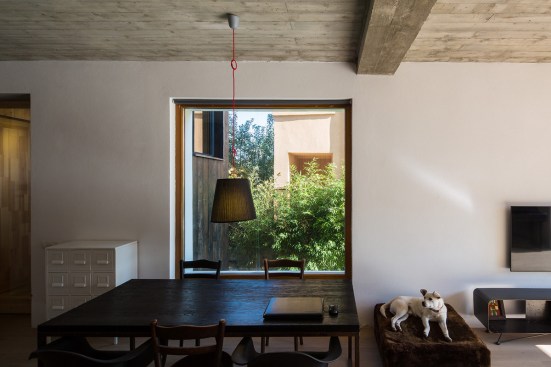
light. This is why towards the backyard (South) you will find primary
functional areas such as the livingroom, the master bedroom and the children’s
bedroom, whilst towards the street (North), the kitchen, bathrooms and the
second floor terrace are positioned.This layout was primarily considered to
have a functional structure.
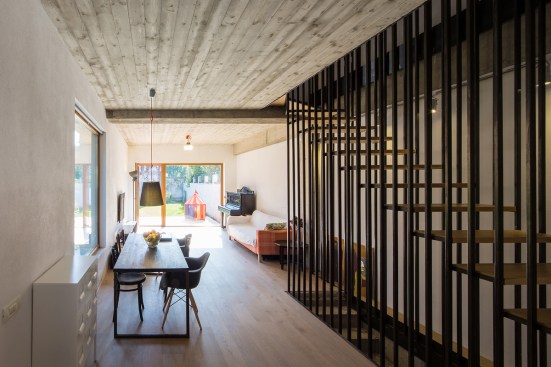
The basement contains a hobby room, the utility
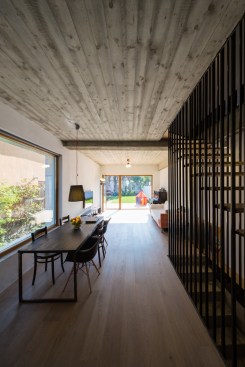
room and storage space. The ground floor provides the outside acces via the
vestibule, to the living area and the kitchen, and a downstairs cloakroom. On
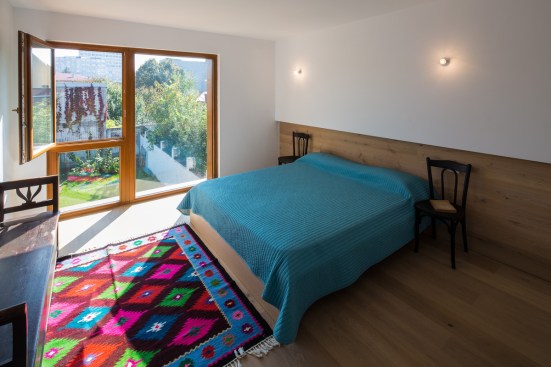
the first floor you will find the master bedroom with a dressing space, the
family bathroom and a small bedroom for the
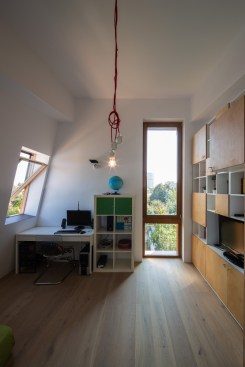
family’s 2 year old baby . The second floor provides the third bedroom, a
library, a bathroom, a storage closet and a private terrace.
Materials, Systems
For the
exterior design, we used PU foam with white decorative finish, burnt
pinewood, white painted steel frames for the openings and triple glazed windows
with timber frames.
The performant triple glazed windows and the PU thermal foam
togheter with the cellulose attic insulation, creates a thermal protection that is twice as efficient to the
commonly used insulation means.
A sustainable ventilation system was integrated, consisting
of air tubes buried at the level of the building’s foundation.
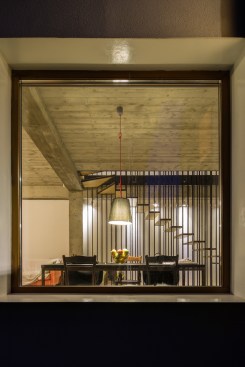
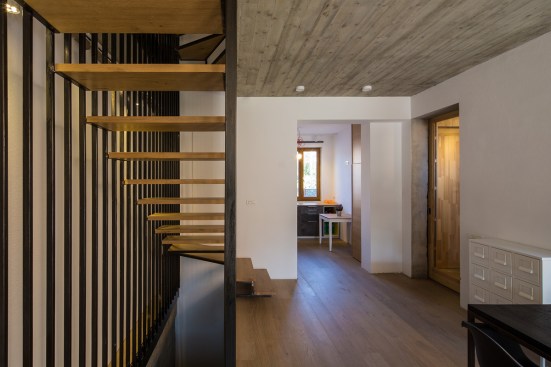
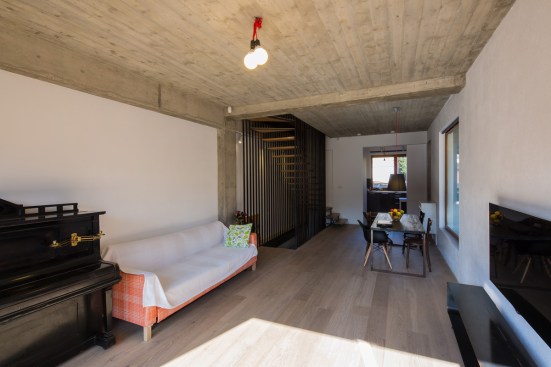
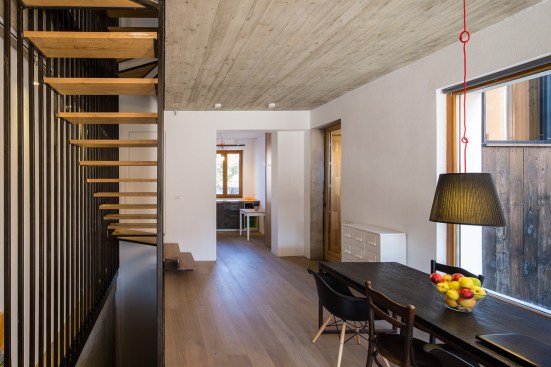
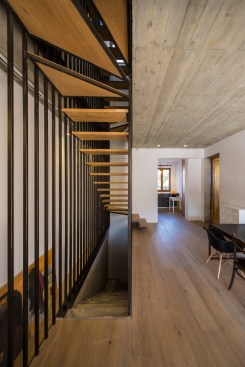
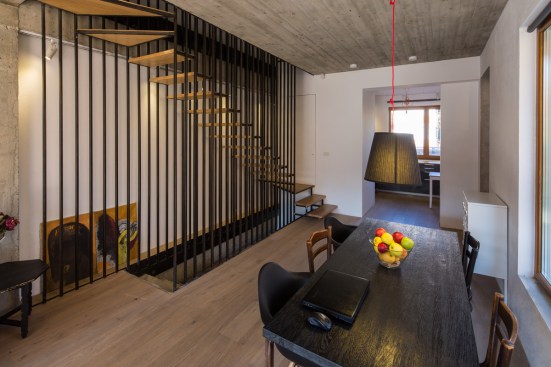
Regarding the interior design, the walls were covered in protection
mortar died white, and the oak floor has a natural colour. The livingroom ceiling purpusely left the exposed concrete,
visible. Travertine plates were used for the acces hallway and inside the
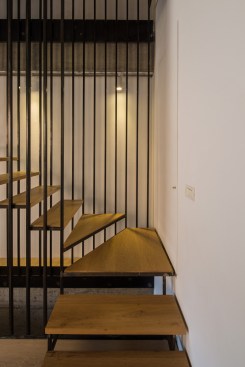
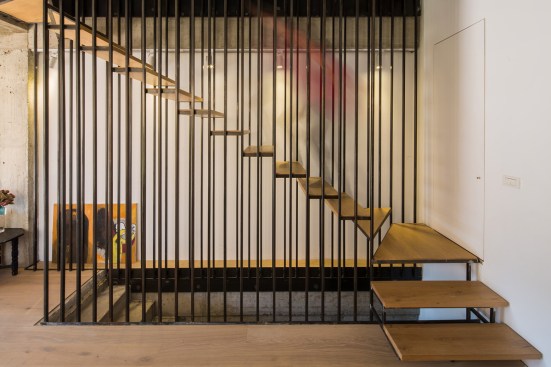
bathrooms .The staircase’s structure was built out of steel and kept with a
natural lacquered appearence. Most of the furniture for the project was custom
made.