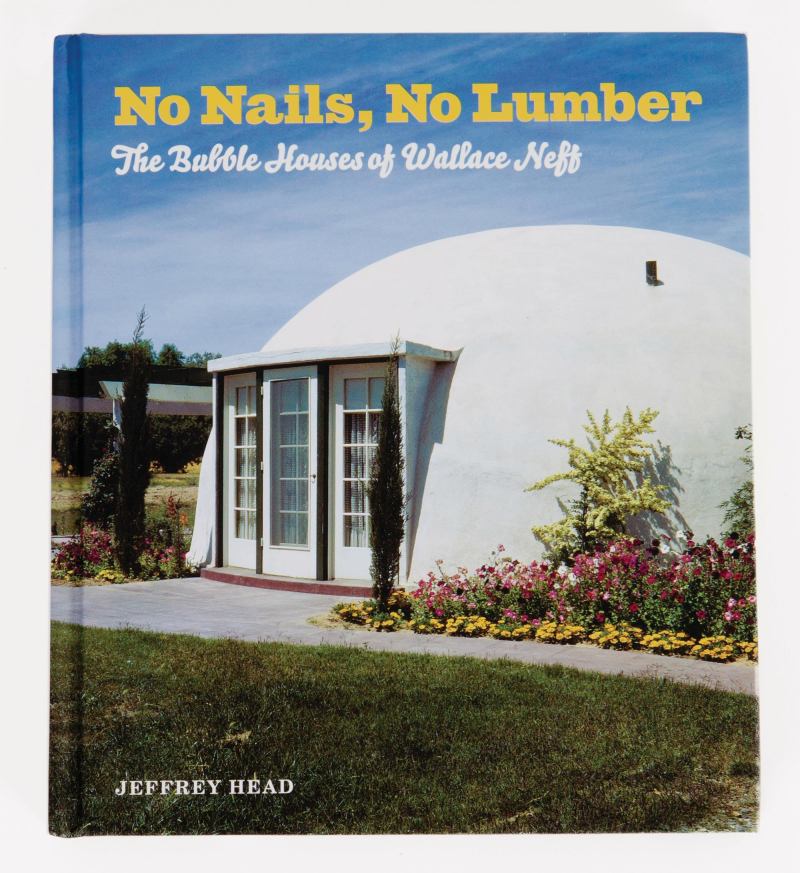
The golden-rod-yellow “bubble house,” built in 1953 in Hobe Sound, Fla., was perfect for its locale: the color and shape mimic one of the state’s main exports, the orange. More importantly, the house’s unconventional form was estimated to withstand seasonal hurricane winds up to 125 miles per hour. Architect Wallace Neff (1895–1982) considered the bubble house and his other pneumatic-type “Airform” buildings to be his most significant contribution to architecture. Of low cost, able to be constructed in 48 hours, and resistant to fire and earthquakes, thousands of such structures were built as schools, houses, and even a gas station during Neff’s lifetime, in such places as Africa, Mexico, and South America. Today, only one bubble house remains, in Pasadena, Calif. No Nails, No Lumber: The Bubble Houses of Wallace Neff by Jeffrey Head explores the typology that Neff thought would solve the global housing crisis. • $24.95; Princeton Architectural Press, December 2011
Book: ‘The Bubble Houses of Wallace Neff’
1 MIN READ
Noah Kalina