


Project Description
Priorities
• Make common areas in residential halls more
comfortable and appealing for students
• Enhance informal learning environments
• Facilitate the spatial scales of Sign Language
Culture
Solutions
Gallaudet University is the only institution of higher
education in the world that’s programmed specifically for students who are deaf, yet
the common areas of its residential halls didn’t honor that reputation. According
to Todd Ray of Studio Twenty Seven Architects, in Washington, D.C., the interiors failed to provide enough windows and open entryways,
ultimately isolating and disconnecting students. Because visual
connectivity is so important within the deaf culture, this ultimately deterred
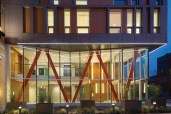
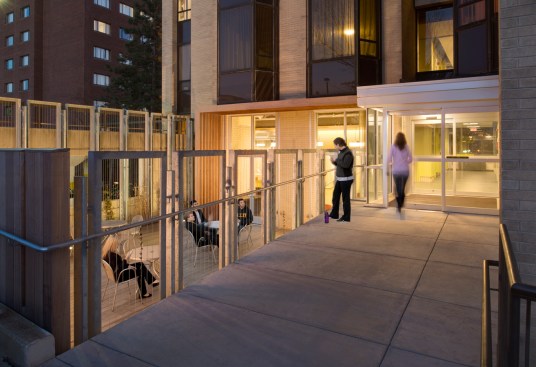
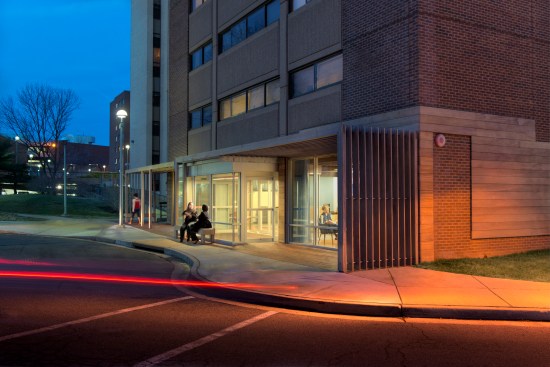
both incoming and prospective students from wanting to live here. Of the seven residential halls at Gallaudet, four were remodeled: Ballard Hall (built in 1965), Benson Hall (1972), Carlin Hall (1979), and Clerc Hall (1971).
To overcome the negative attributes of the existing spaces, Ray worked with
Robert Sirvage, the design researcher for the DeafSpace Project at Gallaudet
University, and Hansel Bauman, campus architect and founder of the DeafSpace
Project, to address small yet critical areas that would create a better living space for
students.
Bauman established the DeafSpace Project (DSP) in 2005 at Gallaudet University in an effort to carve out “an architectural
expression unique to deaf experiences,” because most built environments are
designed by and for hearing people and therefore don’t accommodate a deaf
person’s intimate experience with his or her surroundings. As Ray explains, deafness is a unique culture based on four senses.
Based on the DeafSpace Design Guidelines, the design addresses “the five major touch points between deaf experiences and the built
environment” outlined by DSP: sensory
reach, space and proximity, mobility and proximity, light and color, and
acoustics. To help make these concepts a physical reality, the
architects brought in project manager Ardencia Love-Smalls of Monarc
Construction, in Falls Church, Va.
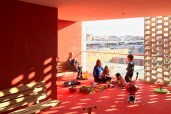
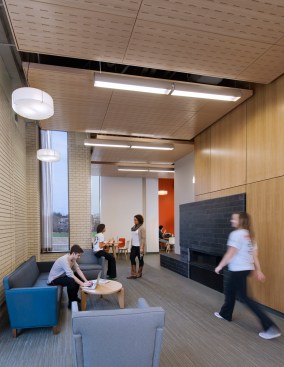
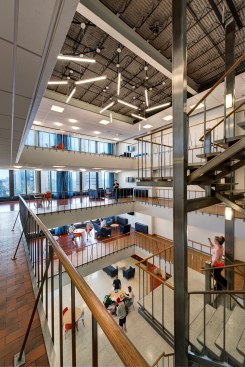
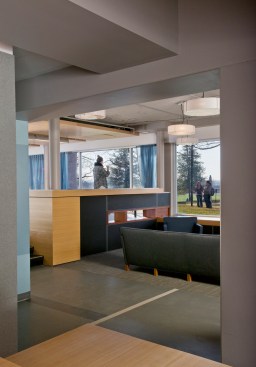
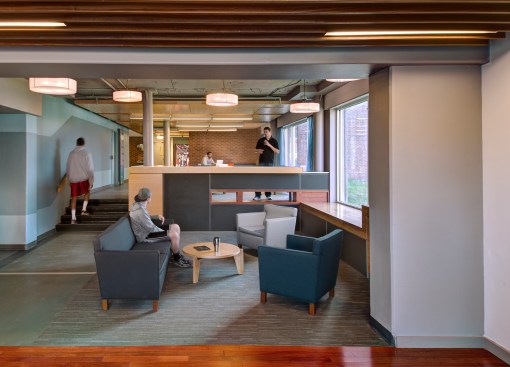
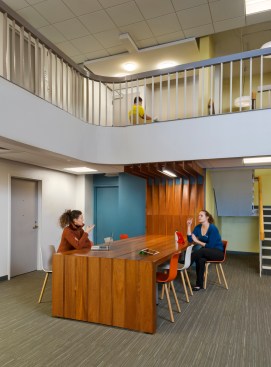
To optimize spatial orientation and awareness, interior walls were removed. When a deaf person enters a room, they often “read”
the activities going on, making them more aware of what’s happening around them than most
hearing people, which is why the openness of the space is so important. Such spatial openness affects the distance for signed conversation, which relies on a clear line of sight of
someone’s “signing space” and their facial expressions. The use of space also plays a key role in facilitating and encouraging group conversations, which usually take place in a circle so that each participant can clearly see the others.
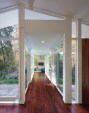
Flooring also plays a significant role in initiating a deaf person into his or her environment. To assist a deaf person in anticipating someone’s approach, the rubber tile used in the remodel transmits subtle vibrations, which mitigates an
abrupt approach. The tile is used in specific parts of the design, including the halls and entryways of the student residences.
Color is important for both deaf and visually impaired
students—Gallaudet offers services for the visually impaired as well. Different colored
materials and textures provide contrast, making it easier to see. For deaf
students, the contrast of a color against a person’s skin tone can help spotlight a person’s signing and facilitate visual “wayfinding” or visual problem-solving. To this end, the design uses color strategically in segmented portions along walls and in study nooks.
Because deaf people are so reliant on their vision, poor
lighting conditions—glare, shadow patterns, and backlighting—had
to be controlled and diffused. Soft lighting attuned to deaf eyes is best because
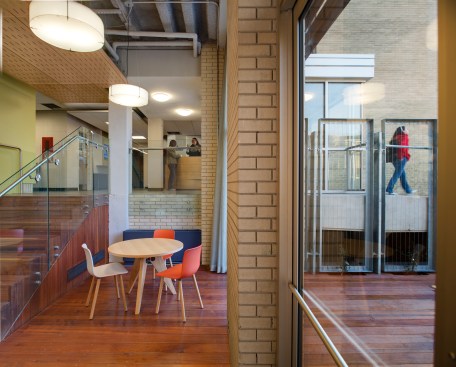
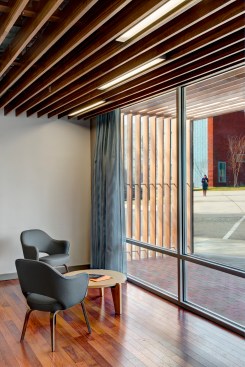
overly bright lighting can cause fatigue and physical exhaustion. The design makes a point of admitting more natural light into the spaces and integrates new light fixtures for general
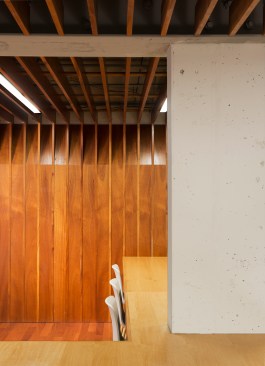
evening lighting. The existing ceiling tiles were removed, exposing the bones of the structure, and the ceiling was either painted a dark, neutral color or a wooden dropped ceiling was installed.
Background noise and sound waves can be distracting and
even painful to the deaf—especially for those with assistive devices—so wherever possible, acoustics must suppress reverberation. To control vibration transfer, ipe wood panels and fabric-covered panels were
used to absorb sound waves rather than bounce them back.
Due to the nature of the student body, additional safety precautions were put in place during the renovation: extra signs warned students of hazardous areas, and bright colors rather than just chain-link fences were used to enclose these areas, since such fencing can be difficult for the visually impaired to see.
Though this project used some specialized materials and had specific design considerations to address due to
the client and end user, Sirvage sees broader relevance for these design principles in creating more comfortable living environments for us all.
Judges’ Comments
The judges felt that Studio Twenty Seven and DSP’s
work at Gallaudet succeeded in creating a warm, welcoming residential environment for the university that doesn’t feel
institutional. The innovative mix and use of materials—such as the different flooring textures of rubber tile, cork, carpet, and wood—was instantly
recognized and applauded by the judges. The lighting and acoustic treatments were called out for being both effective and interesting.
Explore this project further in this video walk-through.
Products
Bathroom plumbing fittings: American Standard Brands
Bathroom plumbing fixtures: Kohler
Countertops: Corian
Entry doors: Dorma automatic sliding glass doors
Fireplace or wood stove: Heat & Glo
Kitchen cabinets: custom fabricated, oak and mahogany
Kitchen plumbing fittings: Kohler
Paints/stains: Sherwin-Williams
Roofing: Carlisle
Siding: ipe wood siding
Windows: Kawneer Window System
Perforated ceiling: Armstrong, Woodworks
Plastic laminate: Abet Laminati
Lighting: Architectural Lighting Systems, Stratos2;
Eglo Lighting, Giron; Dayolite, Dayolite 2×2;
Eureka, Flare
Fabric-wrapped panels: Knoll textiles
Custom curtains: Knoll drapery textiles
Bathroom accessories: Bobrick, Gamco
Click to see the 17 other winners in the 2014 Remodeling Design Awards.