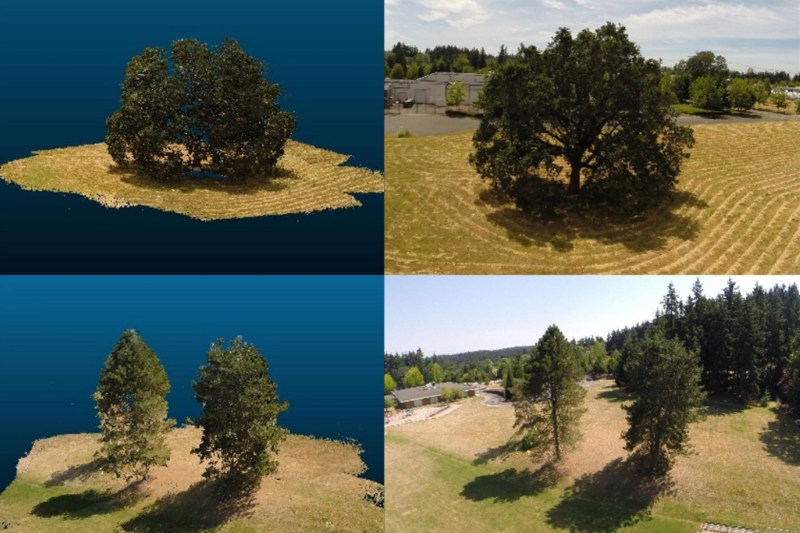
Designed to help forest managers better understand which kinds of trees and other ecological factors will help forests grow back after wildfires and other damaging events, Washington State University’s (WSU) software scales up 100-square-meter stands of drought- and shade-tolerant trees to the size of a real forest. To develop their models, the team used existing forestry databases from industry organizations, including the U.S. Department of Agriculture, and they also collaborated with the U.S. Forest Service to image existing forests with drones.
The complex system includes everything from the tree canopy down to the roots. “Each leaf competes for sunlight, while beneath the virtual earth, the organisms’ roots compete for water resources,” Gizmag explains. WSU’s goal is to predict how events like wildfires, droughts, increasingly warm weather, and other effects of climate change are affecting North American forests growth.
According to WSU’s Nikolay Strigul:
The fear is that drier conditions in the future will prevent forests in places like Washington from re-establishing themselves after a clear-cut or wildfire. This could lead to increasing amounts of once-forested areas converted to desert. Our model can help predict if forests are at risk of desertification or other climate change-related processes and identify what can be done to conserve these systems.
Read more from Gizmag + Washington State University >>